Planes do not wait for pavement here, and 1964 is not entirely past. Alaska Native elders shaped a teaching landscape beside a lake, floatplanes queue on the water, and a fake monster once drew the city to a lagoon. Anchorage keeps northern life close to the surface.
4 stories previewed here ·84 in the app
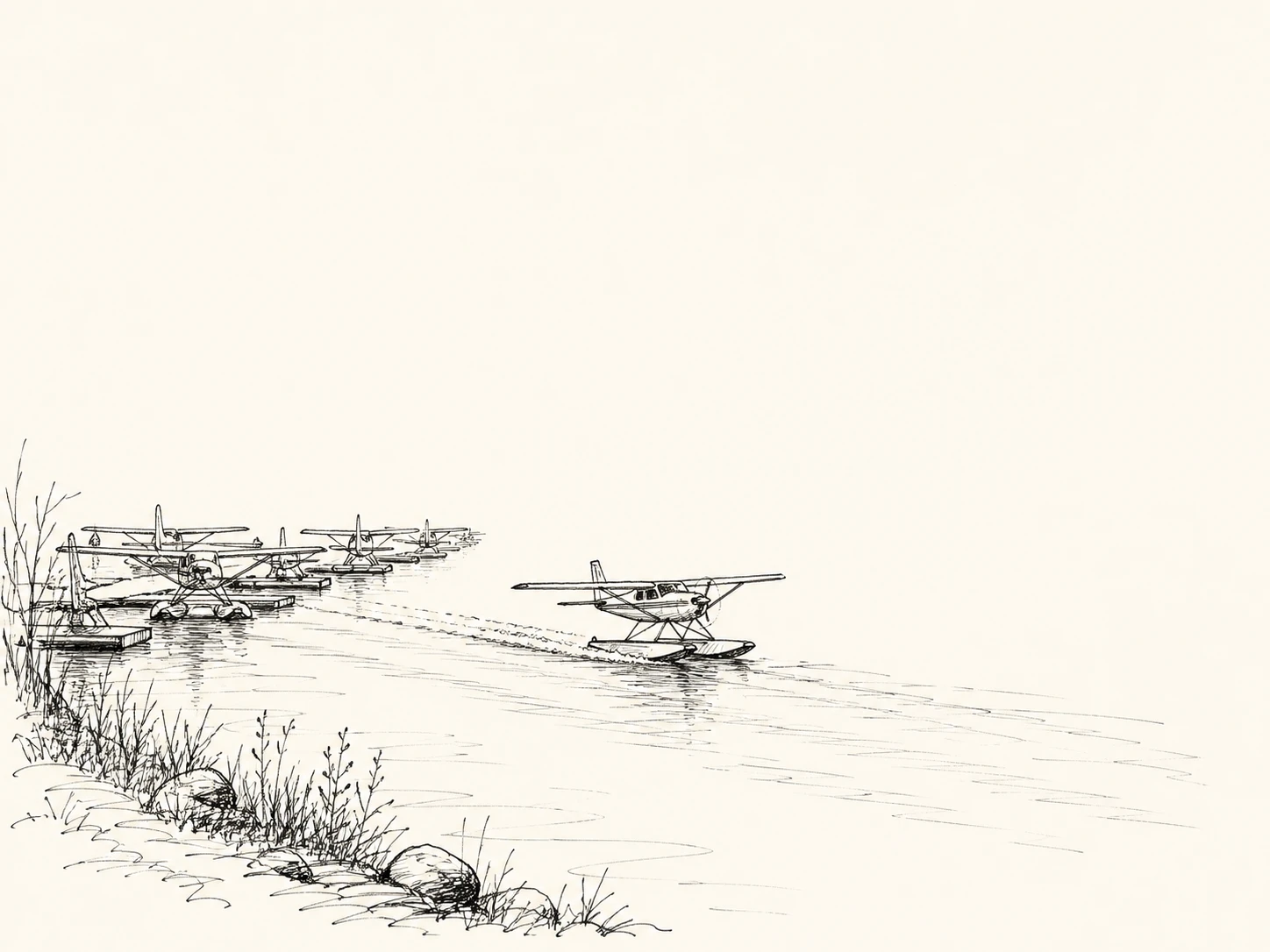
Lake Hood · AI-generated illustration, human selected
Worth a second look
Four Anchorage footnotes
Short excerpts and public sources only. Read the full stories in the City Whisper app.
01 · Alaska Native Heritage Center
Six village sites built with elders
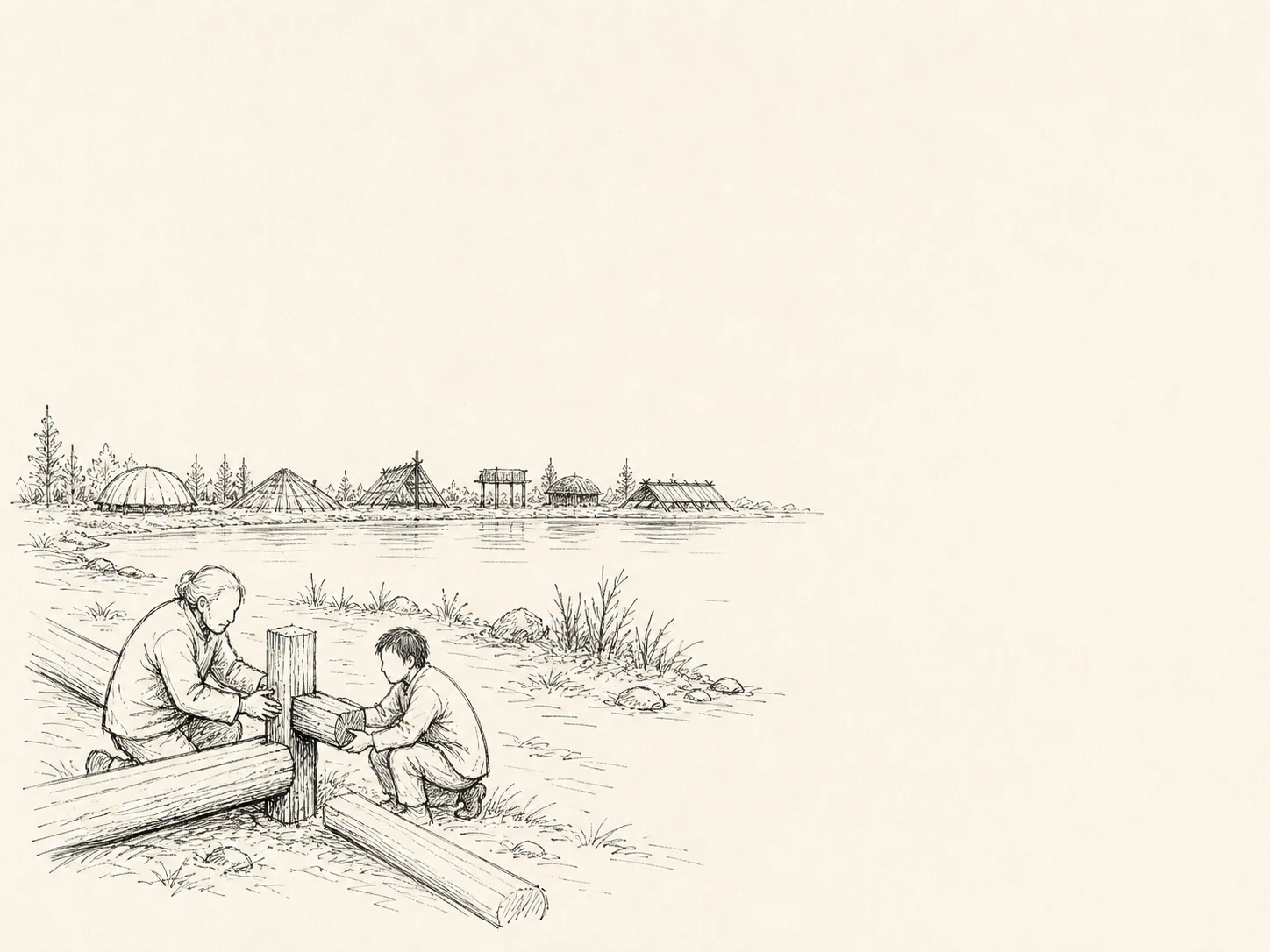
Six structures began as a building lesson from elders.
The sites represent distinct Dena’ina, Yup’ik and Cup’ik, Iñupiaq, Sugpiaq, Unangax̂, and Southeast Alaska traditions. In the late 1990s, elders helped build them and passed techniques to younger people and culture bearers.
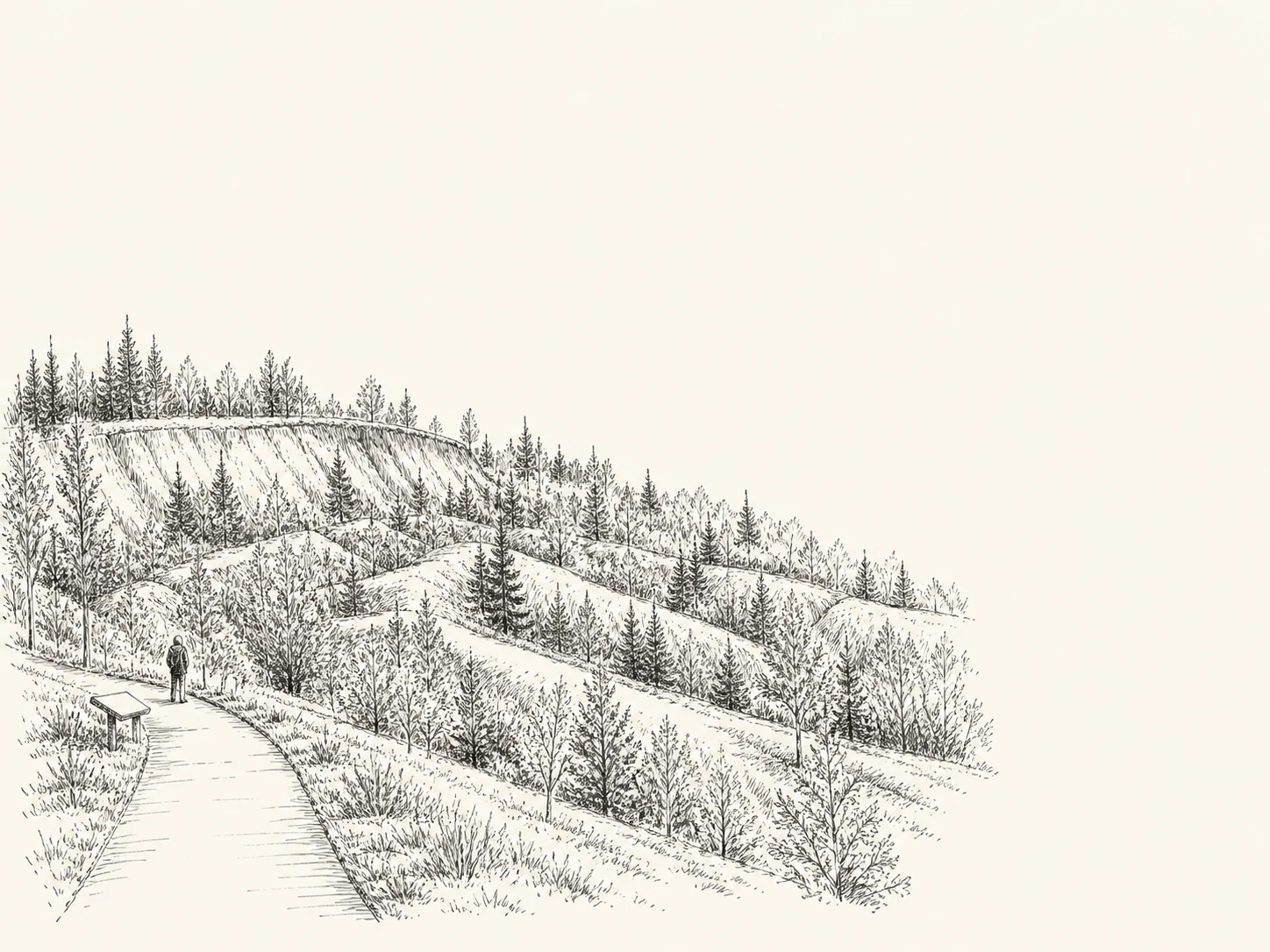
These wooded ridges preserve the ground's shape after 1964.
The magnitude 9.2 earthquake triggered the Turnagain Heights landslide and broke up roughly 130 acres. Trees returned, but hundreds of sharp ridges and collapse troughs still hold the shape of that moving ground.
Lake Hood is a tower-controlled seaplane airport, lined with slips and taxi channels. Its east-west water runway handles roughly 75% of floatplane operations; here, treating water as pavement is everyday transportation.
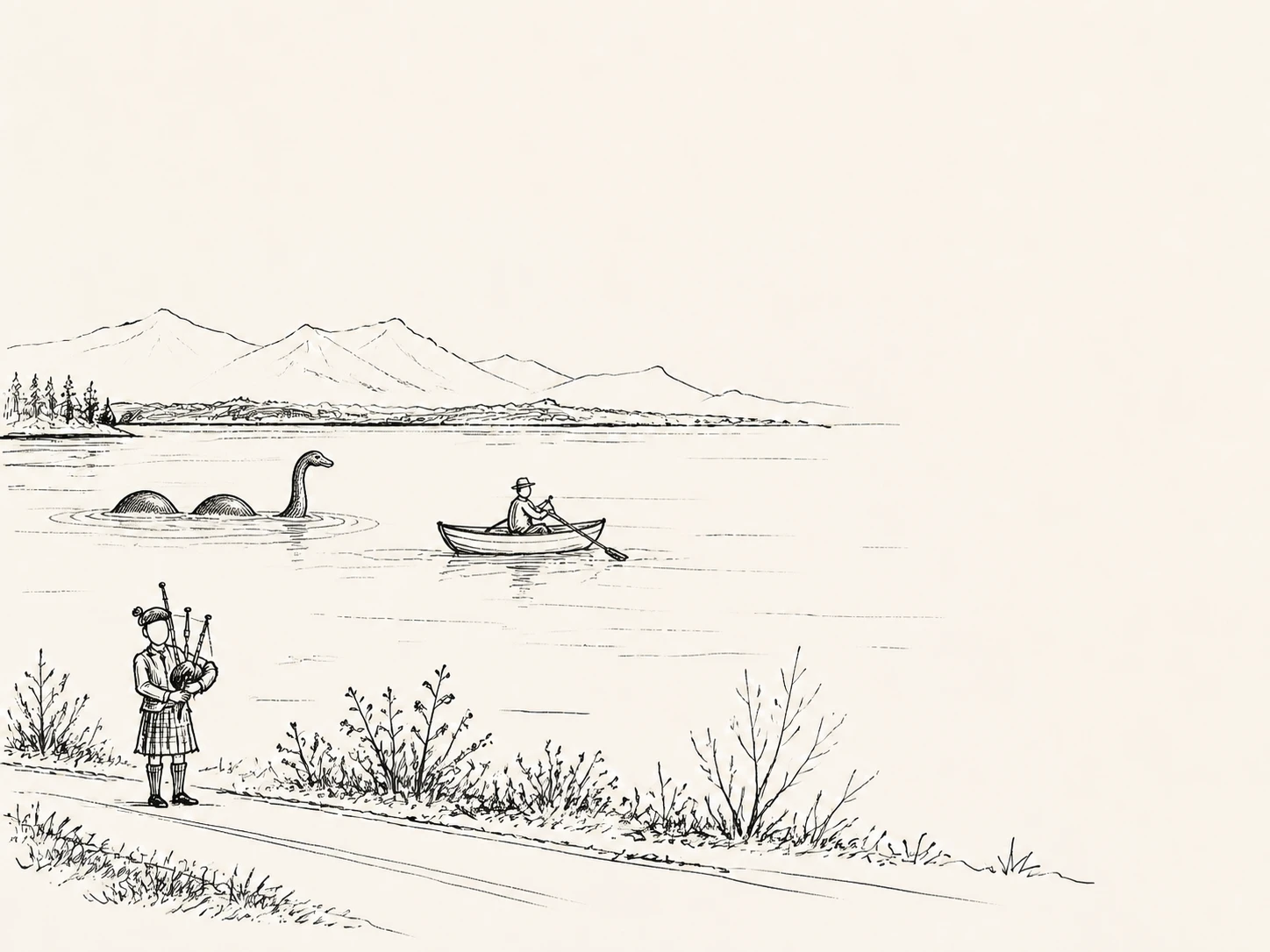
In 1976, a fake lake monster nearly jammed Anchorage.
A radio host rowed across the lagoon searching for a monster while a man in Scottish dress played bagpipes on shore. Onlookers slowed traffic to a crawl, and a promotion turned this artificial lagoon into a citywide theater.
Each drawing on this page was AI-generated and then selected by a human. Share cards in the app label them as AI-generated illustrations. They interpret a place or story; they are not historical photographs, news images, or on-site evidence.