City preview · CALGARY

Calgary’s welcome began with a white hat

Calgary football fans took white hats to Toronto in 1948 and gave them away along the way. Back home, the +15 walkways link buildings through winter, while a glowing sculpture recalls warm winds crossing the Rockies. The Central Library had another local condition to work around: trains already ran through its site.

4 web previews 36 stories in the app

Smithbilt Hats · Editorial illustration, not a historical photo

Calgary, from hat shop to library

White hats, a Chinook arc, trains beneath books and winter walkways

Four complete stories and their public sources are shown here; the rest of the collection is in the app.

01 · Smithbilt Hats

How a white hat became a welcome

Calgary's white hats reached Toronto's mayor before becoming an official gesture of welcome.

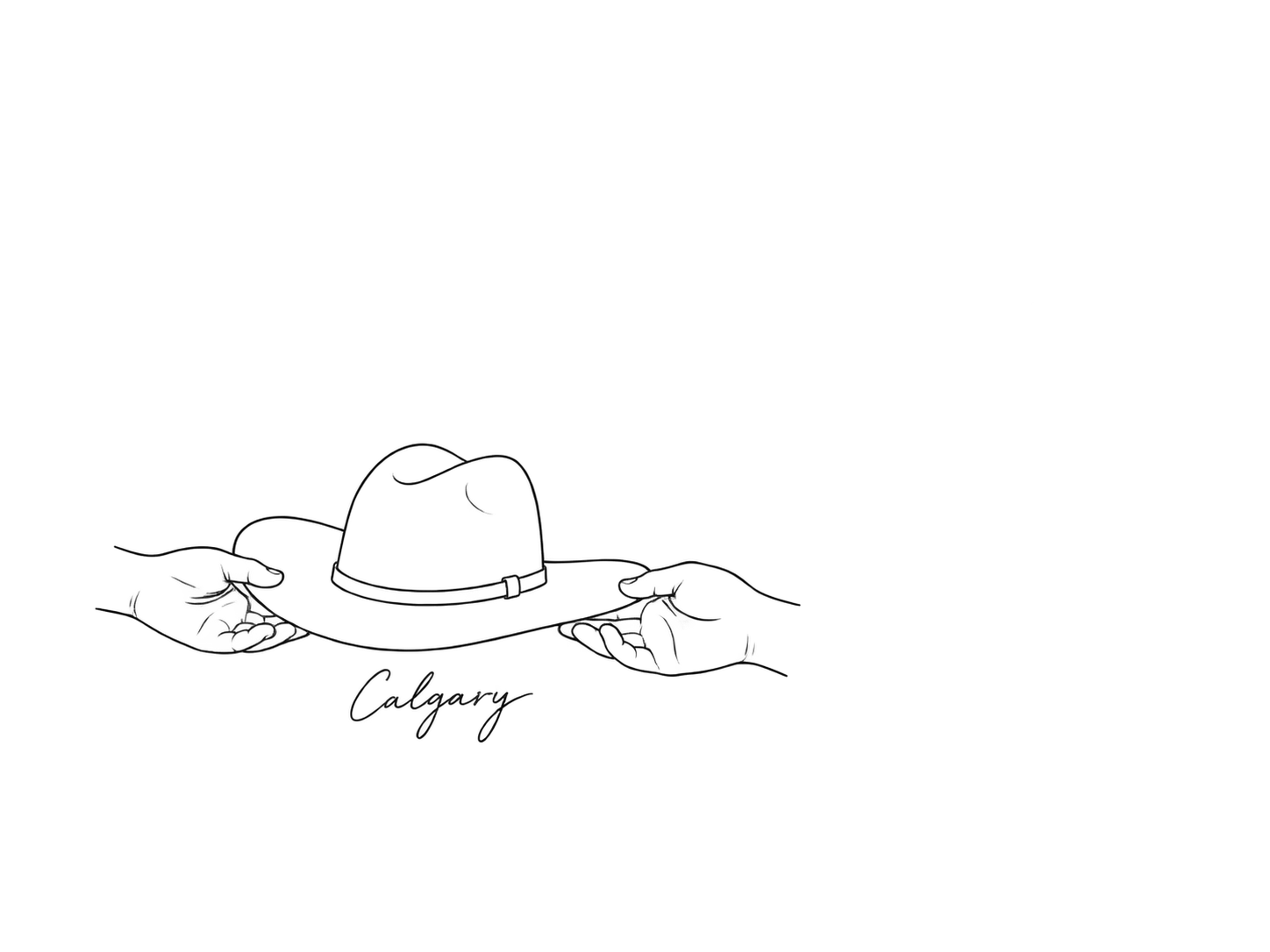
In 1948, Calgarians followed their football team to the championship game in Toronto, giving away Smithbilt white hats along the way. Toronto's mayor received one too. Two years earlier, hatmaker Morris Shumiatcher had worked with the Stampede to promote cowboy hats, and white grew popular. Fellow traveler Don MacKay later became Calgary's mayor and turned hat-giving into a ceremony for guests.

Source: news.calgarystampede.com Source: smithbilthats.com
02 · Chinook Arc

An arc left by a warm wind

This glowing arc draws on Calgary's memory of sudden winter warmth.

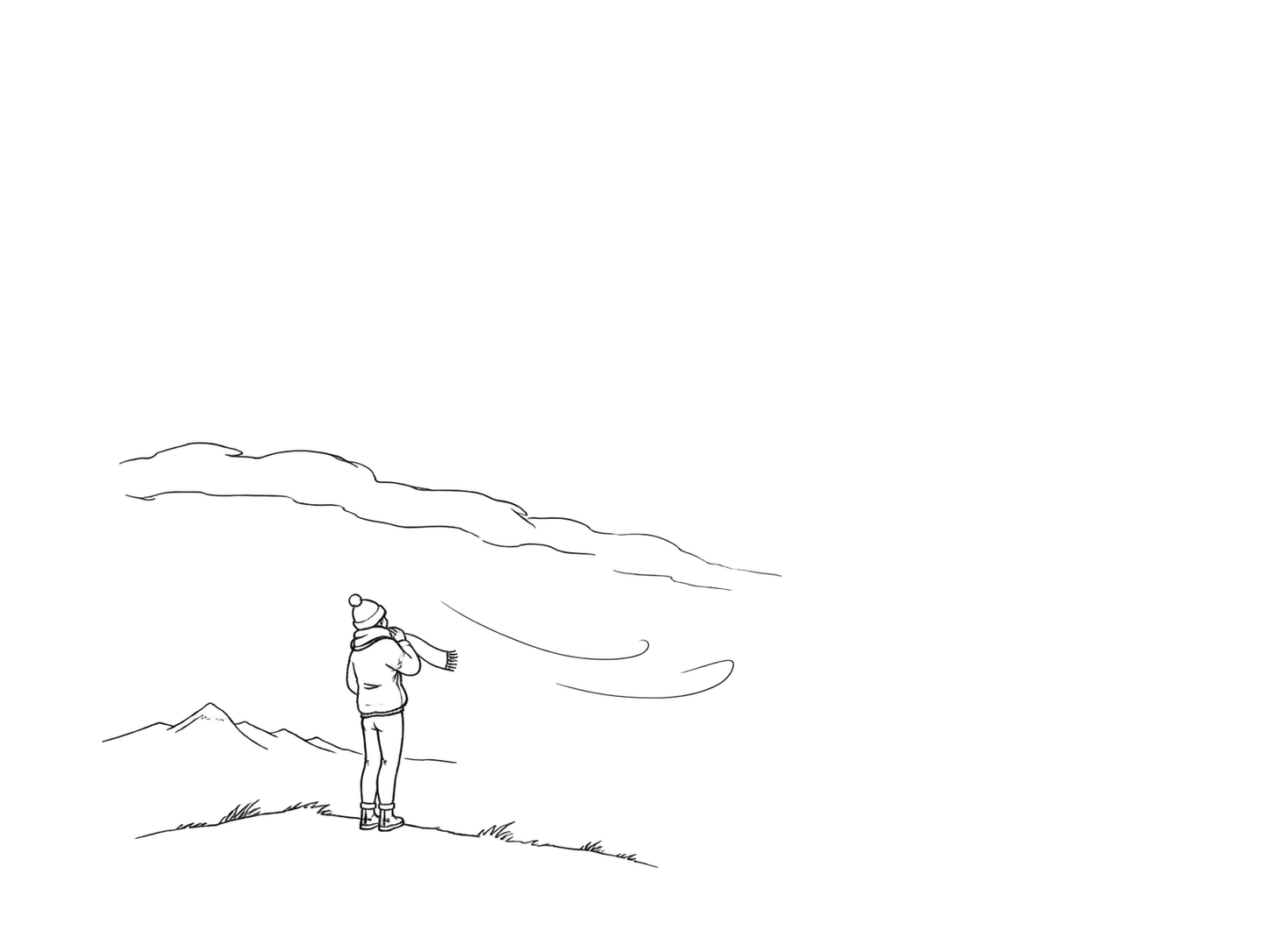
Winter can suddenly turn warm when a west wind crosses the Rockies, descends the sheltered side, and becomes dry and warm. An arched cloud band may appear. Chinook Arc draws on that local weather memory and the shape of an old streetcar loop. Sensors turn people's movements into changes of light. The real warm wind does not arrive at the touch of a button, but the corner keeps an arc you can return to.

Source: creativemachines.com Source: calgary.ca Source: ucp.manifoldapp.org

03 · Calgary Public Library - Central

First, wrap the train

Before the library could rise, the light rail below needed a concrete shell.

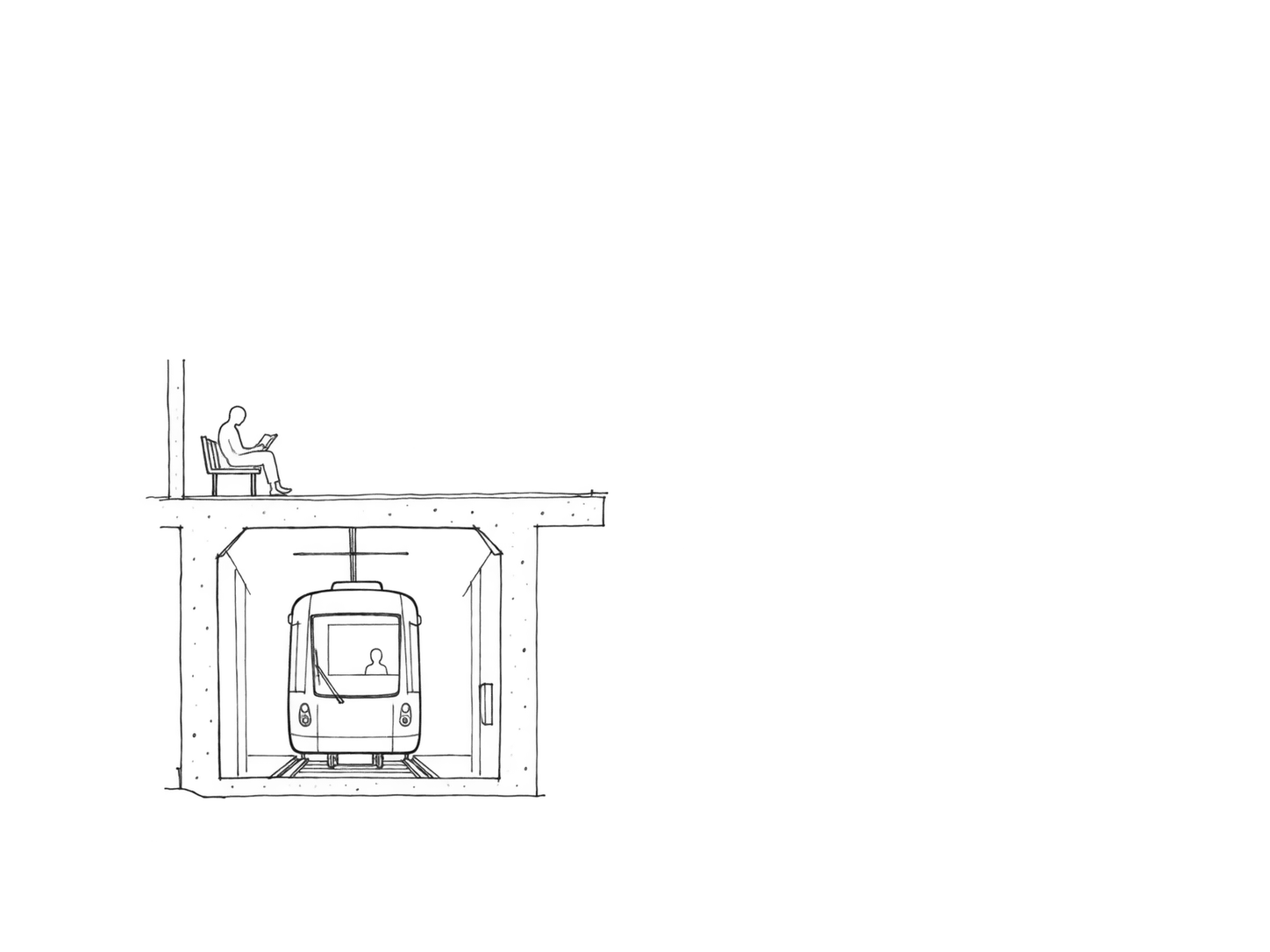
Before the building grew upward, crews were busy enclosing the light rail. The tracks already crossed the site, so engineers wrapped them in concrete and placed new public space above. Construction had to fit around train services, with some work assigned to weekend shutdowns. Readers now climb the steps and find a seat while trains continue underneath. One of the first parts completed here holds no books.

Source: calgarymlc.ca Source: calgarylibrary.ca

04 · The Westin Calgary · +15 entrance

Winter, one bridge at a time

Public corridors through these buildings were negotiated and connected piece by piece.

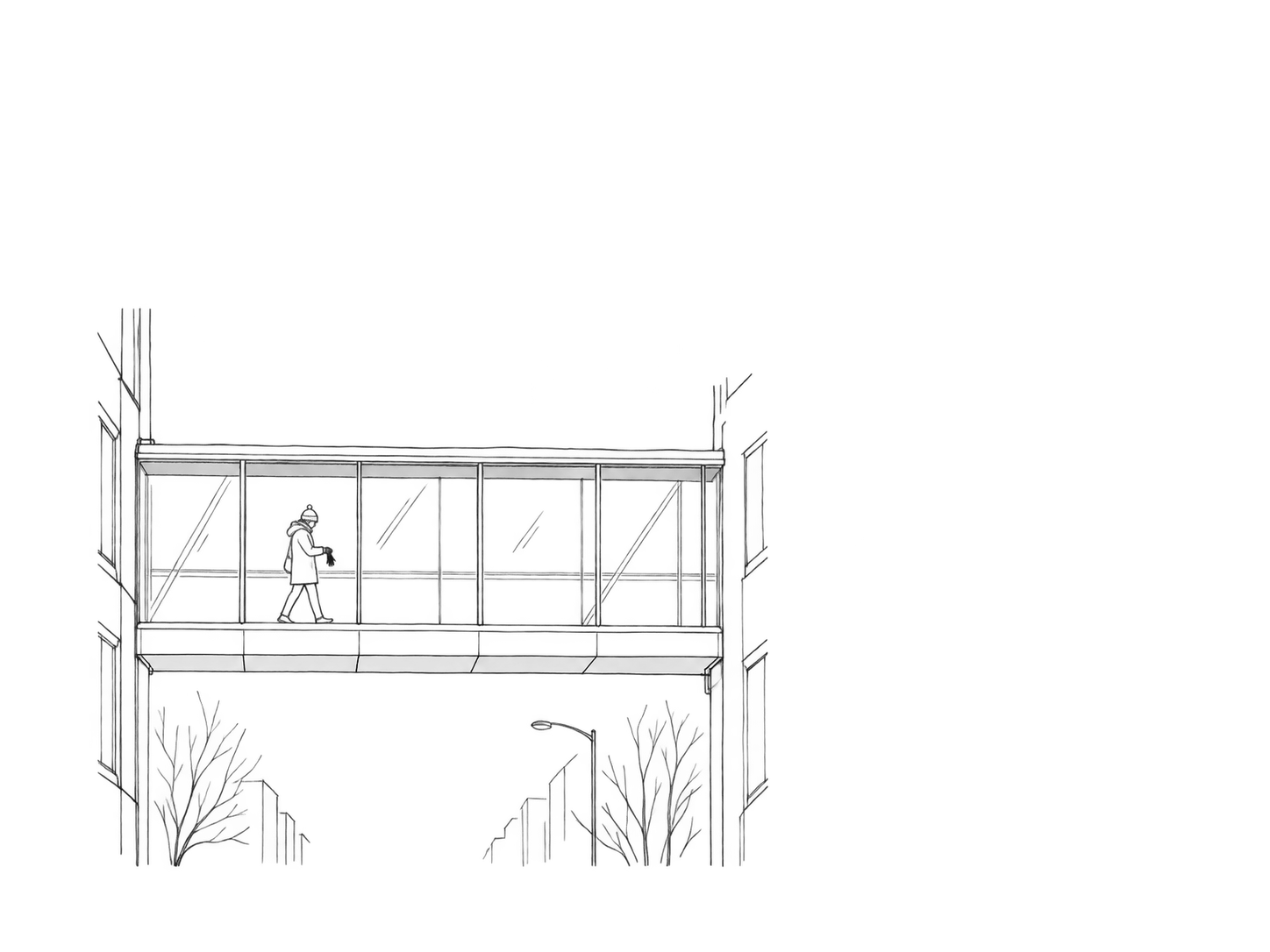
In winter, you can enter a building, cross the street through an upper-floor passage, and keep walking into the next building. The +15 network takes its name from its approximate height of fifteen feet above ground. The city offered incentives, including extra development capacity, for bridges and public corridors. Different owners still manage the buildings, but the pedestrian route needs to connect. The Westin–Calgary Place bridge was an early part of this gradually assembled network.

Source: calgary.ca Source: calgary.ca Source: calgary.ca

Continue in the app

Carry all 36 Calgary stories with you

Read without location access. Pass-by reminders are optional, and precise location is never uploaded.