City preview · GUADALAJARA

Guadalajara moved a telephone building without stopping the calls

When an avenue was widened, engineers moved the telephone building while its operators kept working. The cathedral’s spires replaced older towers, and Mercado Libertad’s curved roof brings space and light above the stalls. Competing mariachi bands in a city square inspired passages of orchestral music.

4 web previews 47 stories in the app

Catedral de Guadalajara — Plaza Guadalajara · Editorial illustration, not a historical photo

Cathedral spires, a market roof and music in the square

Rebuilt towers, concrete roof curves, competing bands and a moving telephone building

Four complete stories and their public sources are shown here; the rest of the collection is in the app.

01 · Catedral de Guadalajara — Plaza Guadalajara

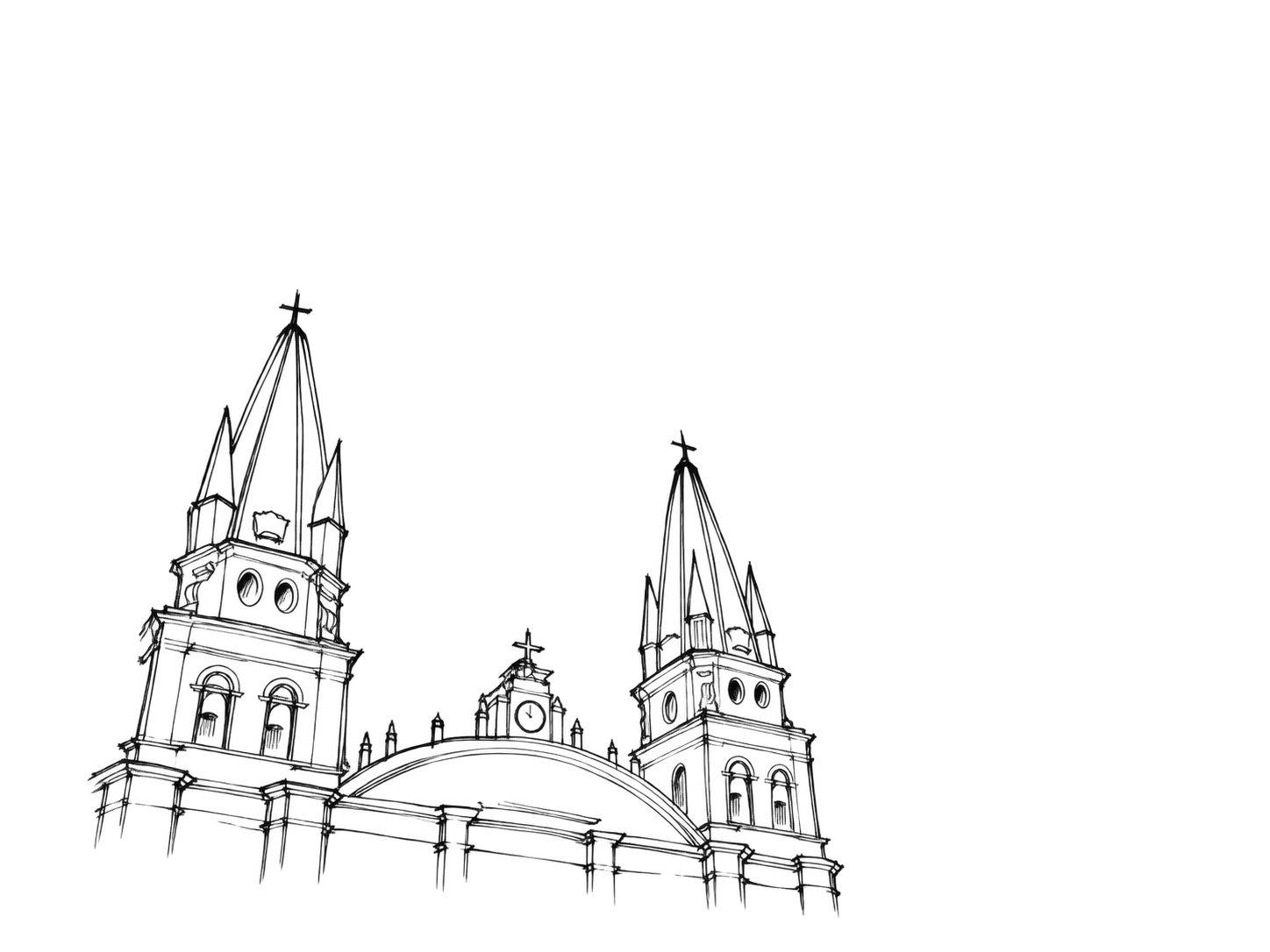
The cathedral's towers changed their tops

Earthquake damage gave these towers a different outline.

Guadalajara Cathedral's earlier bell towers ended in domes. The earthquake of 1818 destroyed the old towers, and architect Manuel Gómez Ibarra redesigned their tops. The pointed pair seen today was completed in 1854, above surviving square bases from the earlier construction. The whole cathedral was not rebuilt, but its most recognizable outline changed. From the square in front, the older lower sections and later spires can be read together.

Source: catalogonacionalmhi.inah.gob.mx
02 · Mercado Libertad - San Juan de Dios

There is more market above the stalls

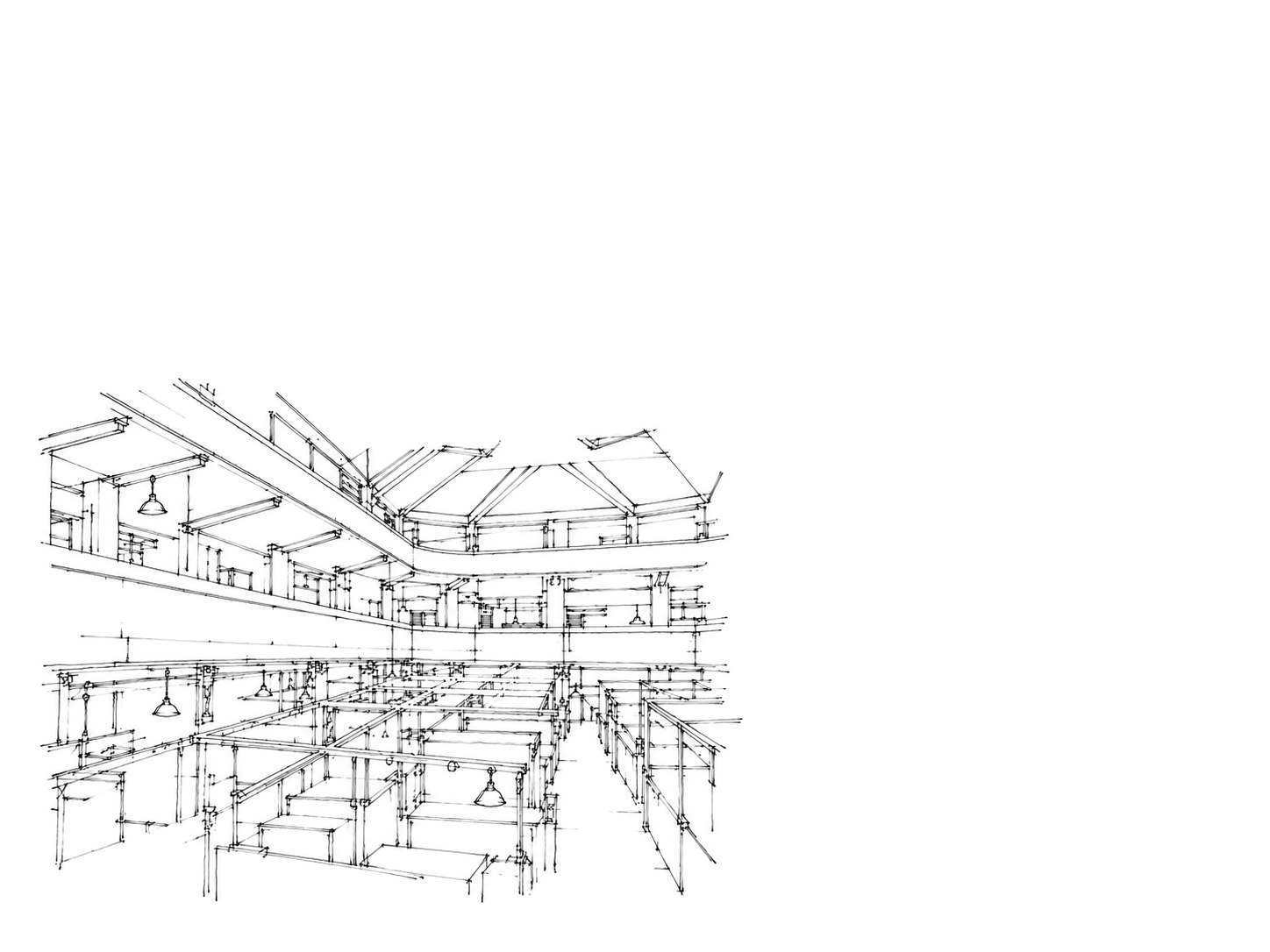
The roof is a series of curves, not one slab.

Mercado Libertad's roof joins curved concrete surfaces above a high central space, leaving openings between them for light. Architect Alejandro Zohn used the structure to span a large area for closely packed stalls without shutting daylight out. Looking up from the market reveals where the surfaces rise, meet and leave gaps. The stalls occupy a space shaped by those choices overhead.

Source: sc.jalisco.gob.mx Source: munarq.inba.gob.mx

03 · Plaza de los Mariachis

Competing bands became orchestral parts

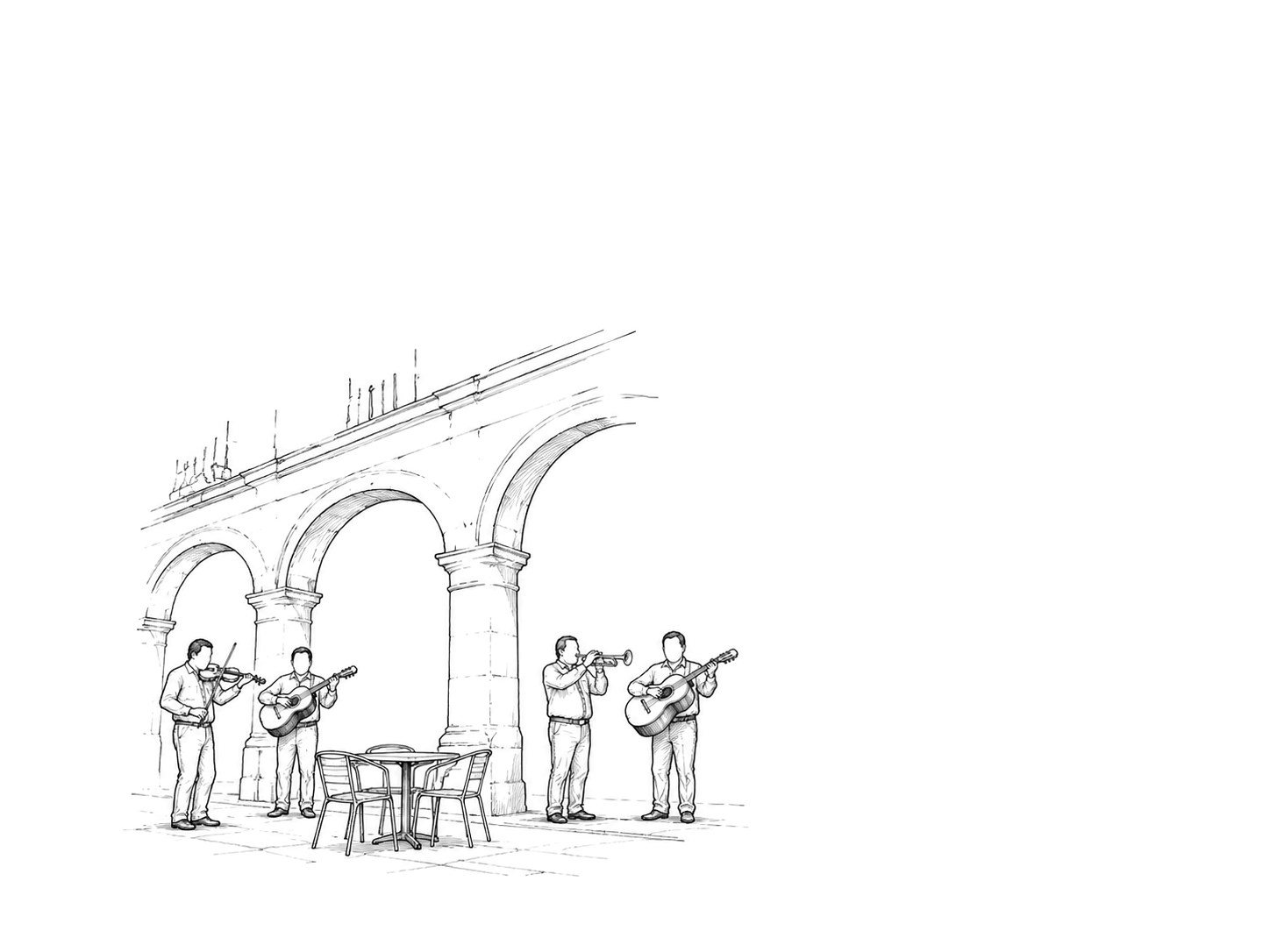
Several bands' competing sounds found their way into a score.

Composer Juan Pablo Contreras has described this square in his hometown as an inspiration for Mariachitlán. Different mariachi bands played to attract customers, their sounds interrupting and overlapping one another. He brought that experience into an orchestral work, letting its sections compete too. When musicians are active here, the way a group attracts listeners and starts a tune can be as revealing as the tune itself.

Source: mineria.org.mx

04 · Estatua de Jorge Matute Remus

The building moved; the calls kept coming

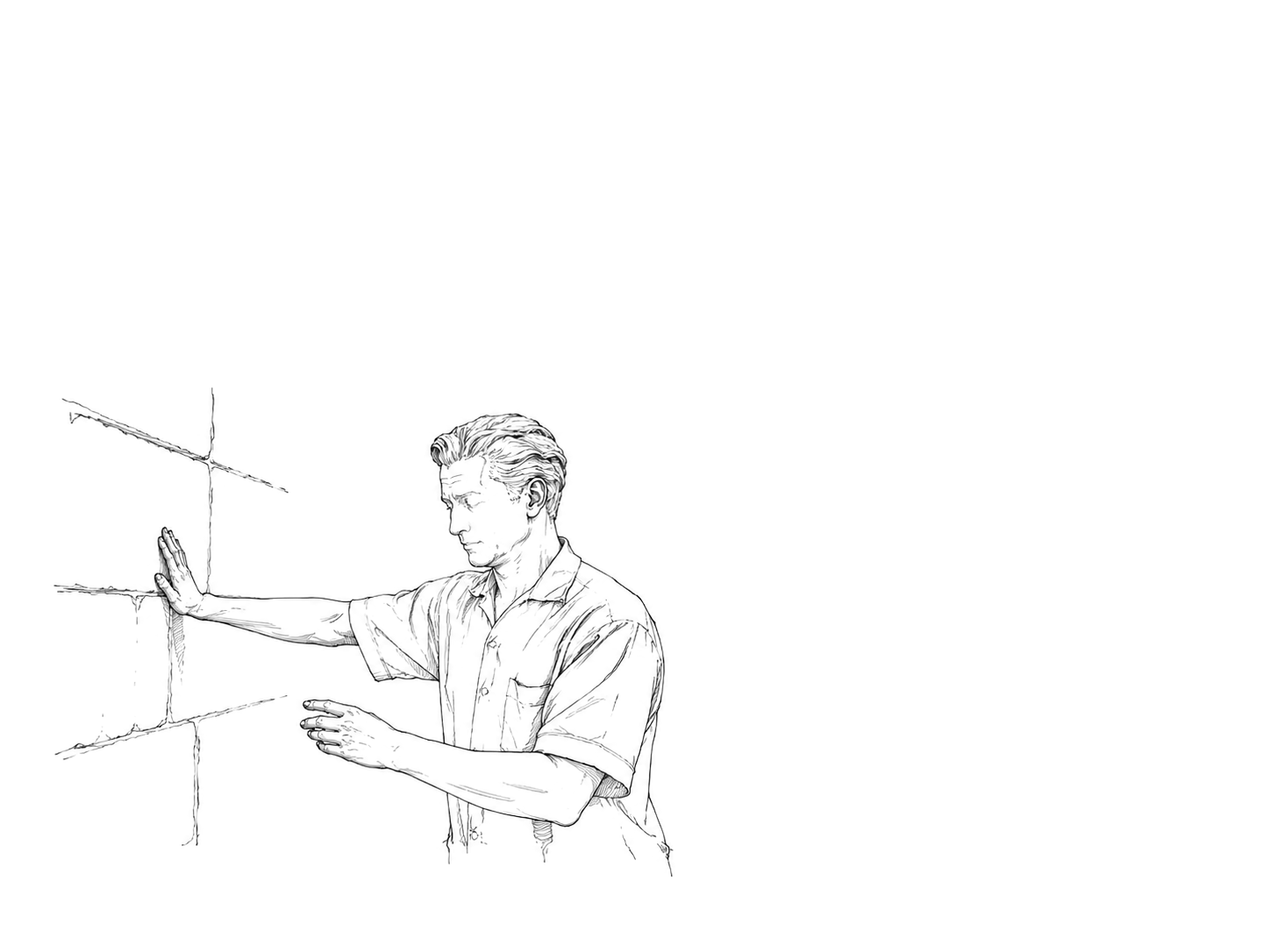
The statue pushes a wall that really did move.

When Juárez Avenue was widened, a telephone building stood in the way. Engineer Jorge Matute Remus arranged to move it roughly 39 feet (twelve meters) and rotate it slightly instead of demolishing it. Operators kept working inside and telephone service continued. His later statue presses both hands against the wall. Machinery did the actual moving; the pose makes an otherwise hard-to-see change in the building's position easy to notice.

Source: tequiero.guadalajara.gob.mx

Continue in the app

Carry all 47 Guadalajara stories with you

Read without location access. Pass-by reminders are optional, and precise location is never uploaded.