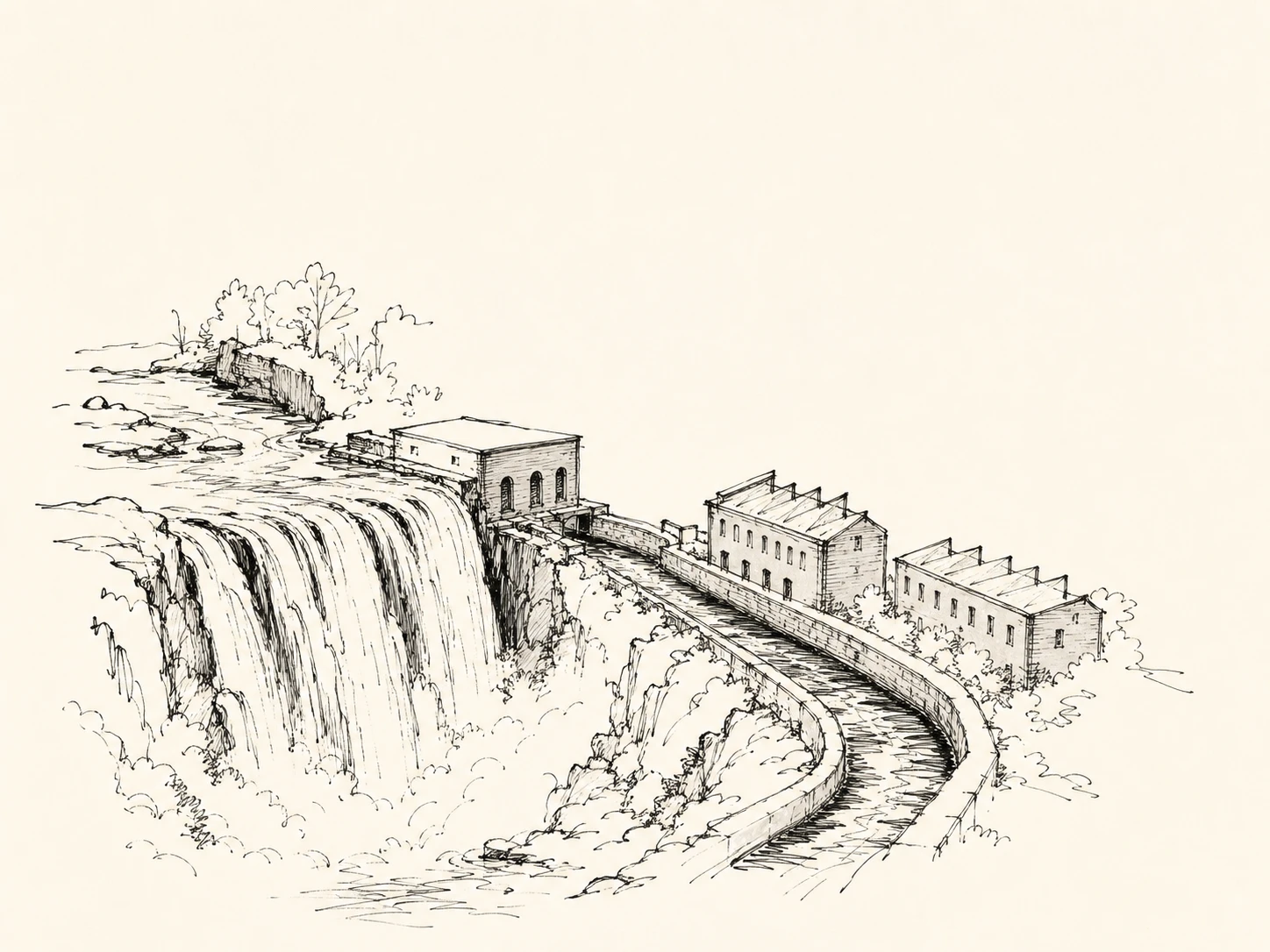
Manhattan supplies the skyline across the river; New Jersey keeps the machinery. Steel arches lift for ships, square towers breathe for a tunnel, and Great Falls once powered a factory city. Even a quiet lawn holds the memory of an explosion that shook the harbor.
4 web previews ·55 stories in the app
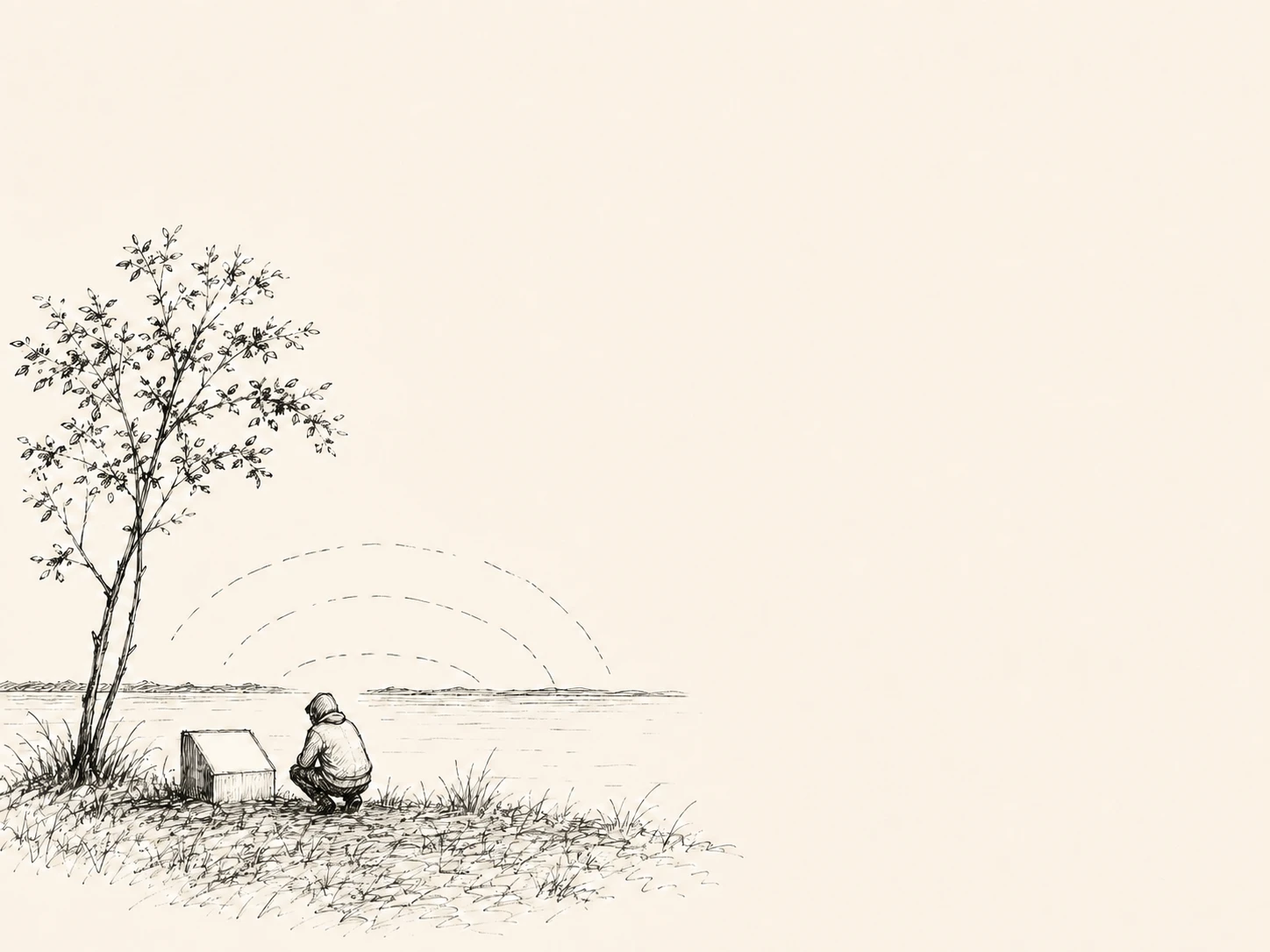
Black Tom Island · Editorial illustration, not a historical photo
Look again as you pass
Four New Jersey footnotes
Short previews and public sources only. Read the complete collection in City Whisper.
01 · Black Tom Island
The blast across the harbor
A munitions blast from this quiet lawn once shook Manhattan.
In July 1916, a large stockpile of munitions exploded at the Black Tom docks. The shock wave reached Manhattan and damaged the Statue of Liberty; investigators later attributed the attack to German sabotage.
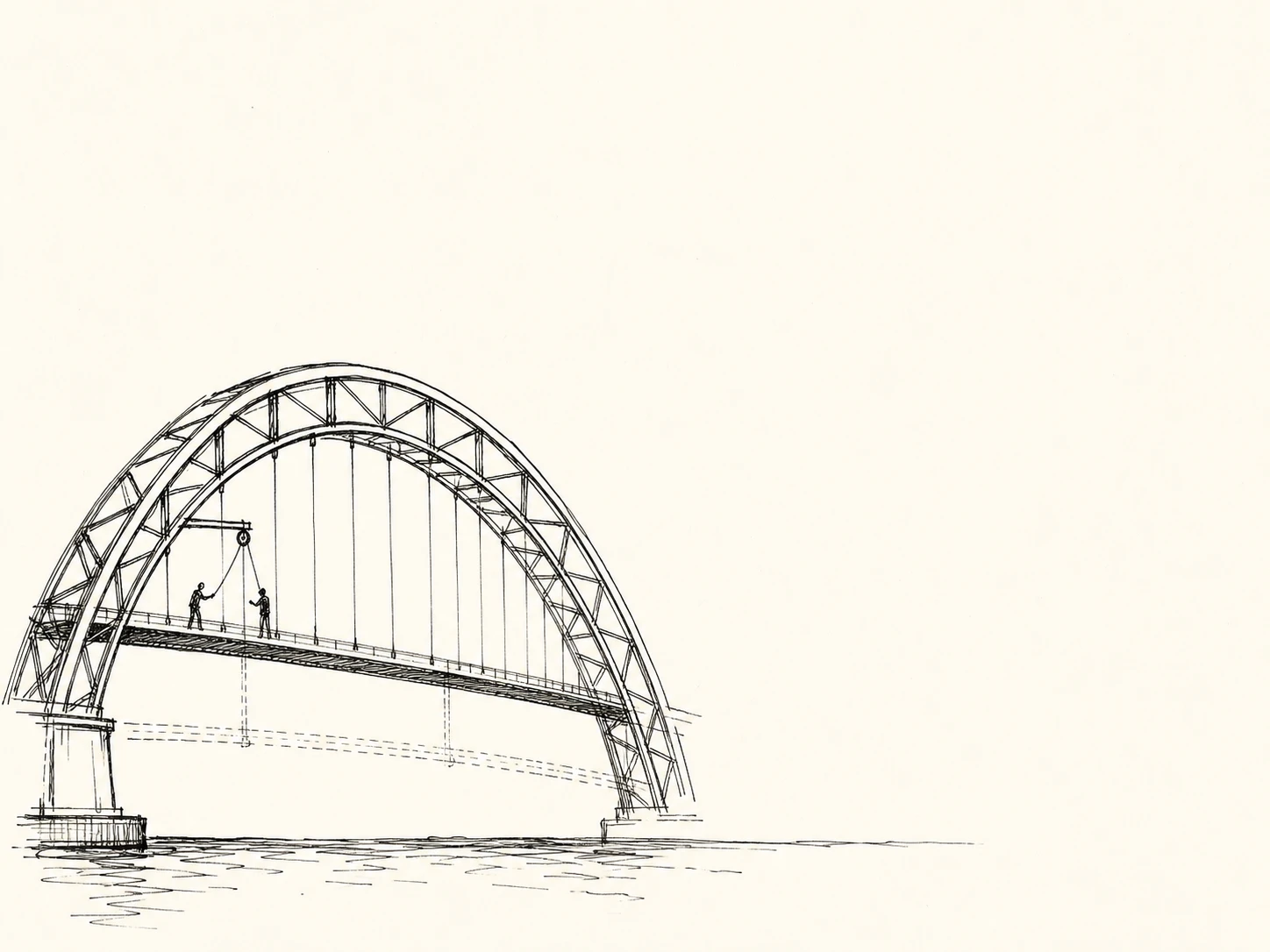
This steel arch lifted its own deck to clear larger ships.
When the Bayonne Bridge opened in 1931, it was one of the world's longest steel arch bridges. Between 2013 and 2019, the Port Authority raised its roadway about 64 feet within the existing arch so larger container ships could enter the harbor.
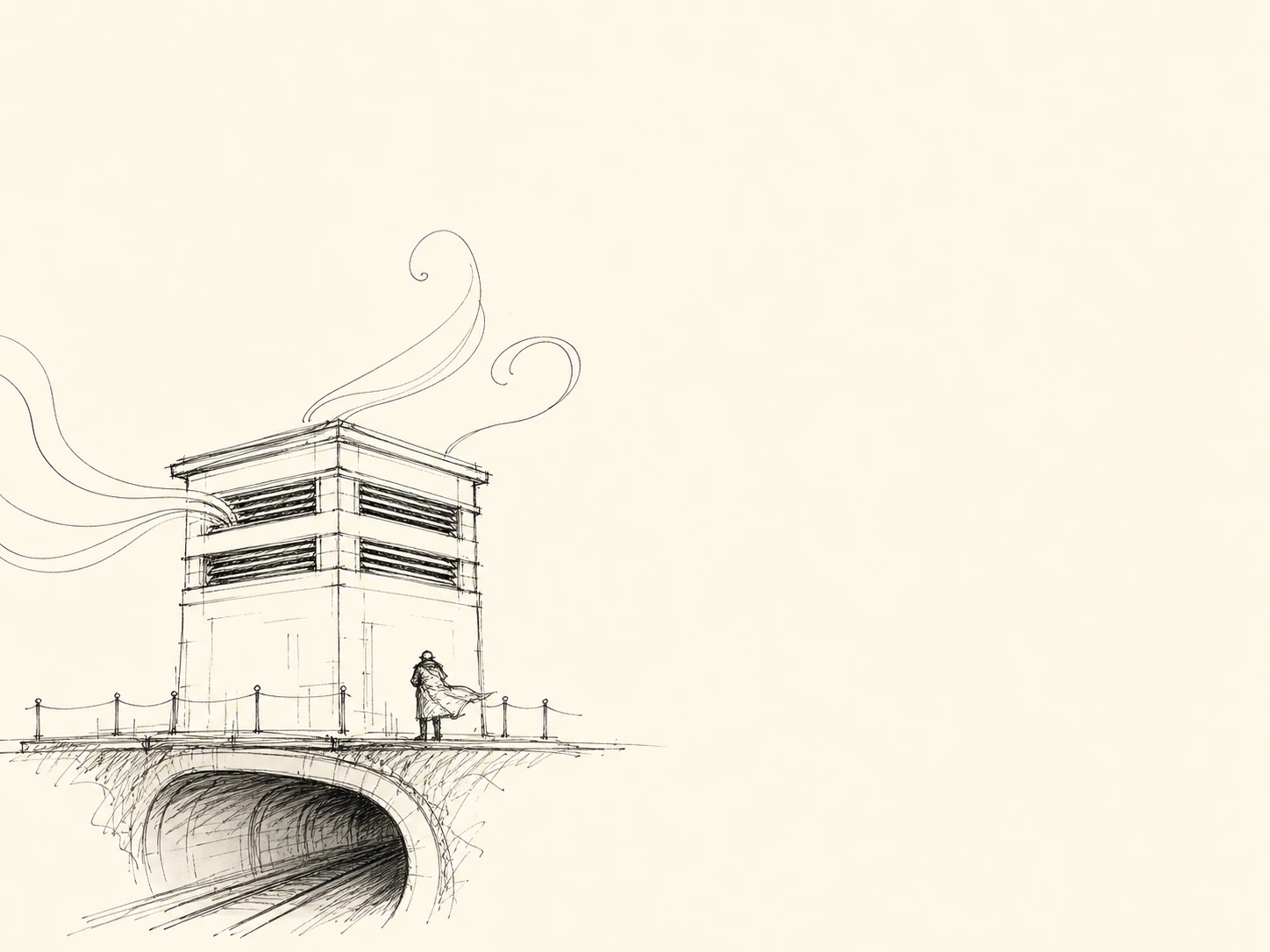
This brick tower is one lung of the Holland Tunnel.
When the Holland Tunnel opened in 1927, mechanical ventilation solved the problem of vehicle exhaust accumulating under the river. New Jersey's ventilation buildings pull fresh air in and push polluted air out for a tunnel hidden below.