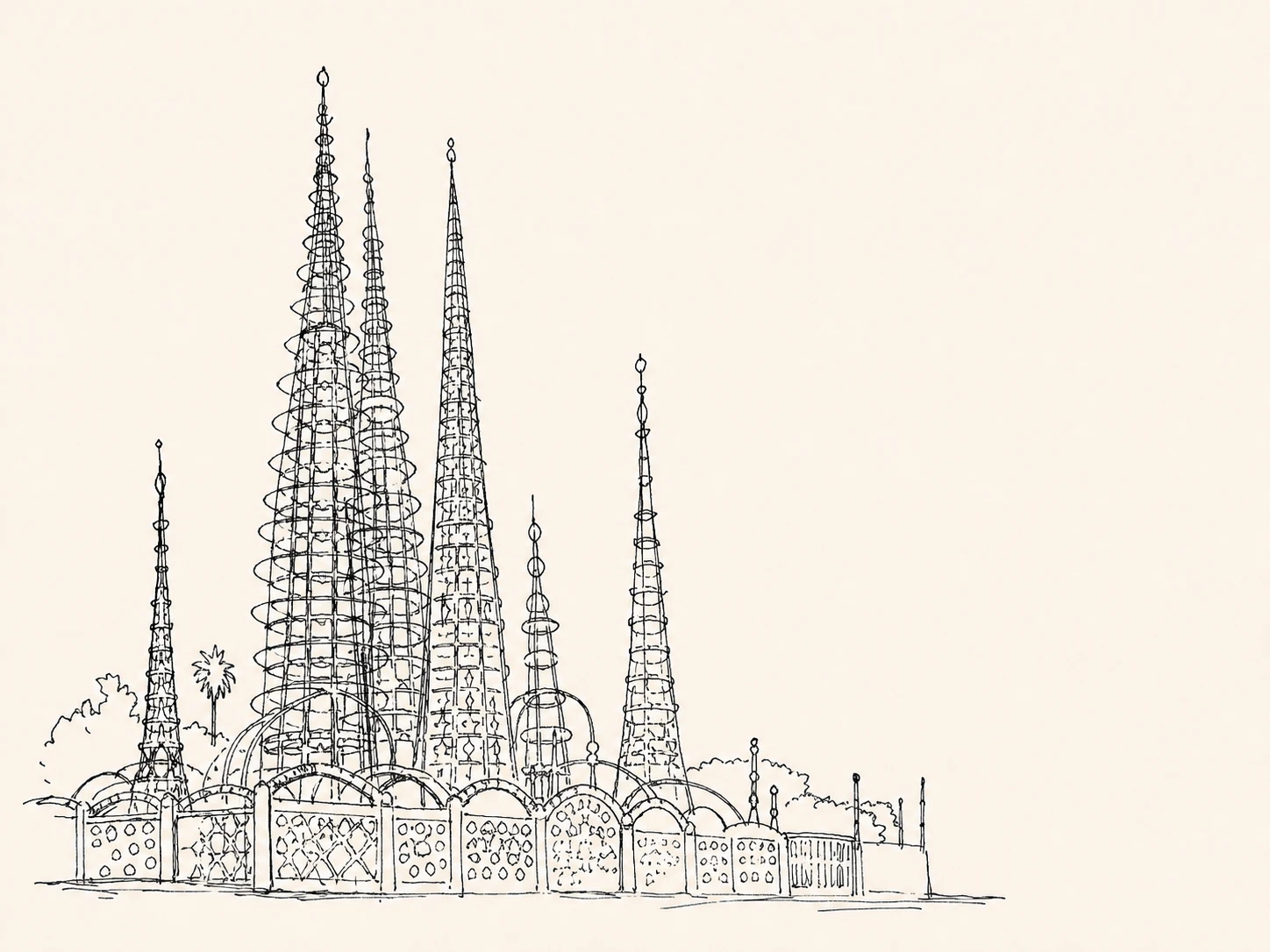
An 1893 office building has played the future, while asphalt bubbles under a city lawn with no special effects. Above it all, an observatory frames stars and basin together, and one man spent more than thirty years raising towers in his backyard.
4 web previews ·185 stories in the app
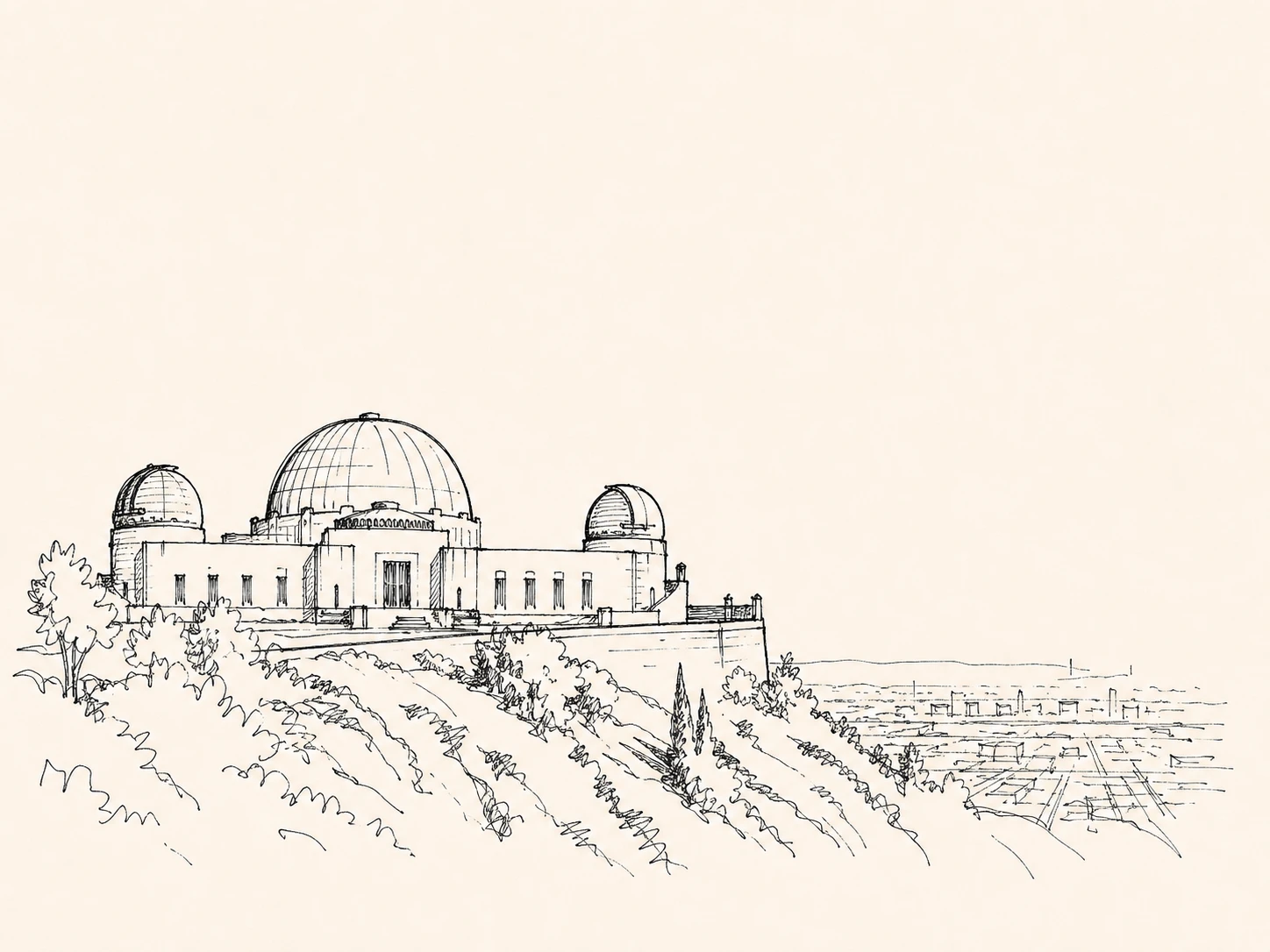
Griffith Observatory · Editorial illustration, not a historical photo
Look again as you pass
Four Greater Los Angeles footnotes
Short previews and public sources only. Read the complete collection in City Whisper.
01 · Griffith Observatory
Facing sky and city
The observatory looks toward the stars and back across the entire Los Angeles Basin.
Griffith Observatory opened in 1935 as a public astronomy institution and quickly became one of the city’s best places to look back at itself. White domes face the sky; terraces face the basin.
Beneath this lawn, natural asphalt is still bubbling toward the surface.
La Brea Tar Pits is Los Angeles’s most direct underground time machine. Natural asphalt seeped upward and trapped mammoths, saber-toothed cats, and other Ice Age animals over tens of thousands of years.
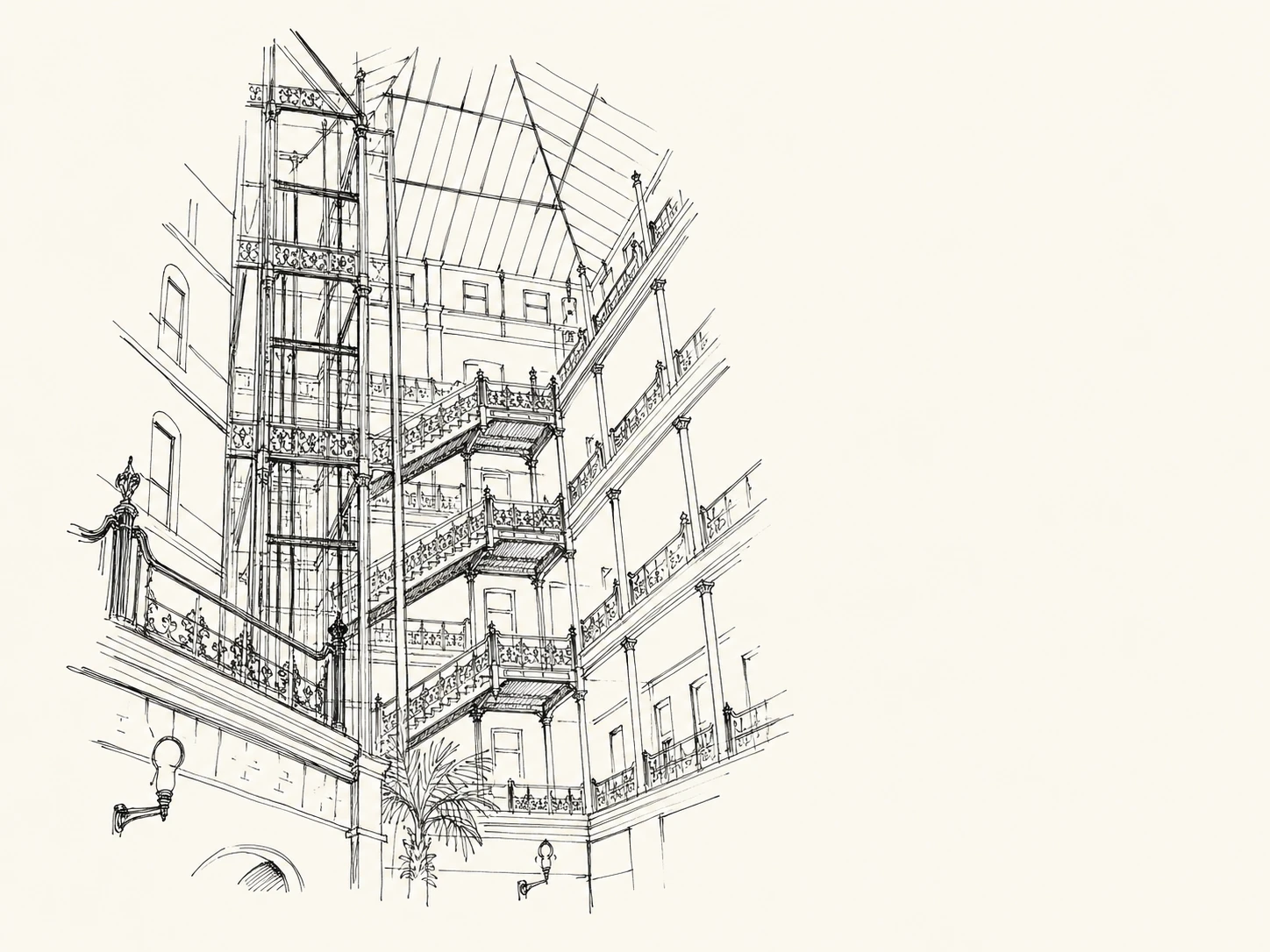
The future in Blade Runner is an 1893 office building.
The Bradbury Building was completed in 1893. Its exterior is quiet; the event is inside, where a five-story court, iron stairs, open cage elevators, and a skylight pull daylight all the way to the floor.