Before downtown pushed into the water, Gold Rush ships crowded the shoreline. Their hulls remain under the Financial District, cable cars still move on an unseen loop of steel, and the bridge carries a color chosen for fog. In San Francisco, the waterline is closer than the map suggests.
4 web previews ·127 stories in the app
Presidio · Editorial illustration, not a historical photo
Look again as you pass
Four San Francisco Bay Area footnotes
Short previews and public sources only. Read the complete collection in City Whisper.
01 · Presidio
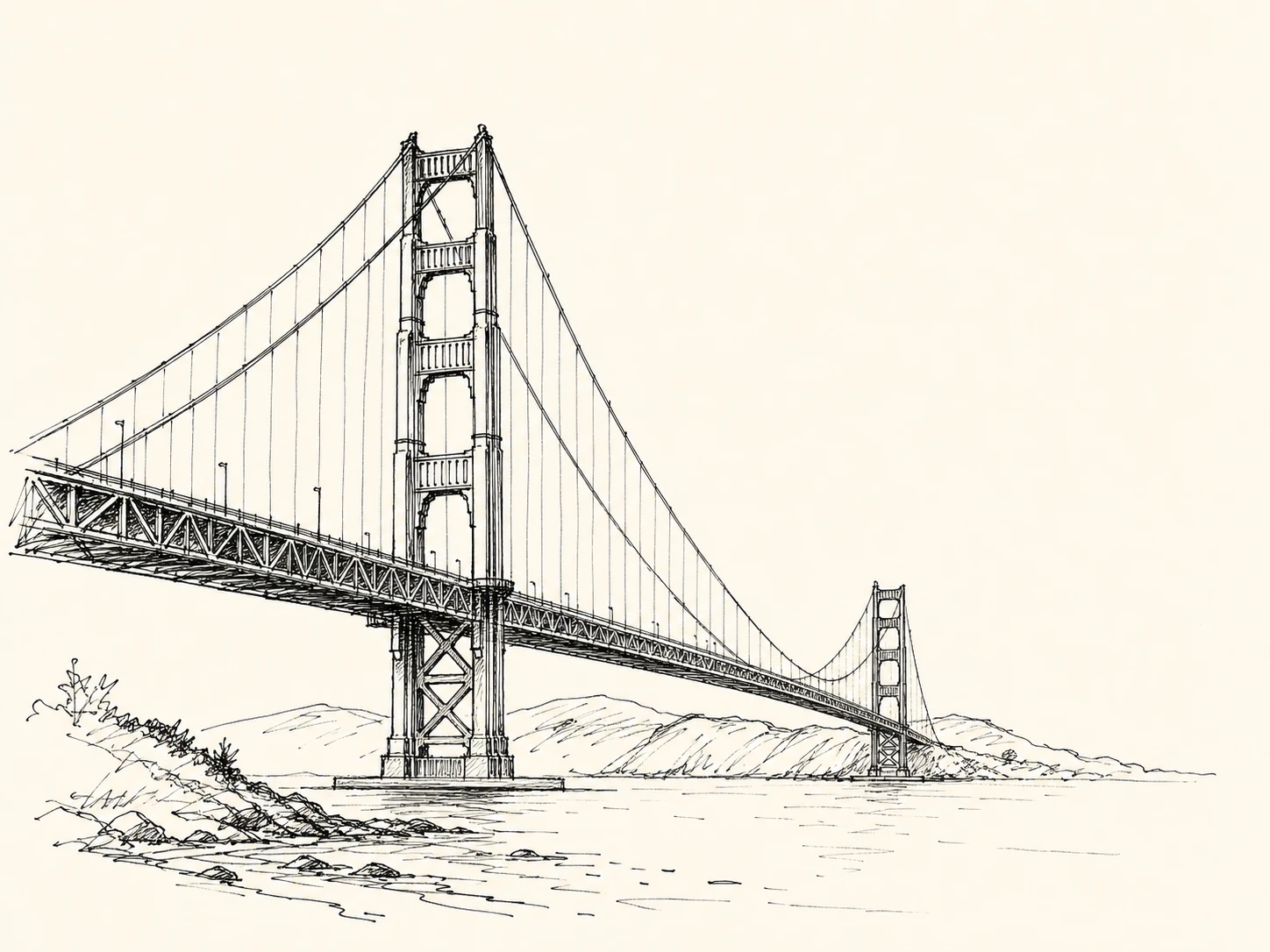
It nearly wore black and yellow
The bridge's International Orange nearly lost out to the Navy's black-and-yellow stripes.
Before the bridge opened in 1937, the U.S. Navy argued for black-and-yellow stripes so ships could see it clearly.
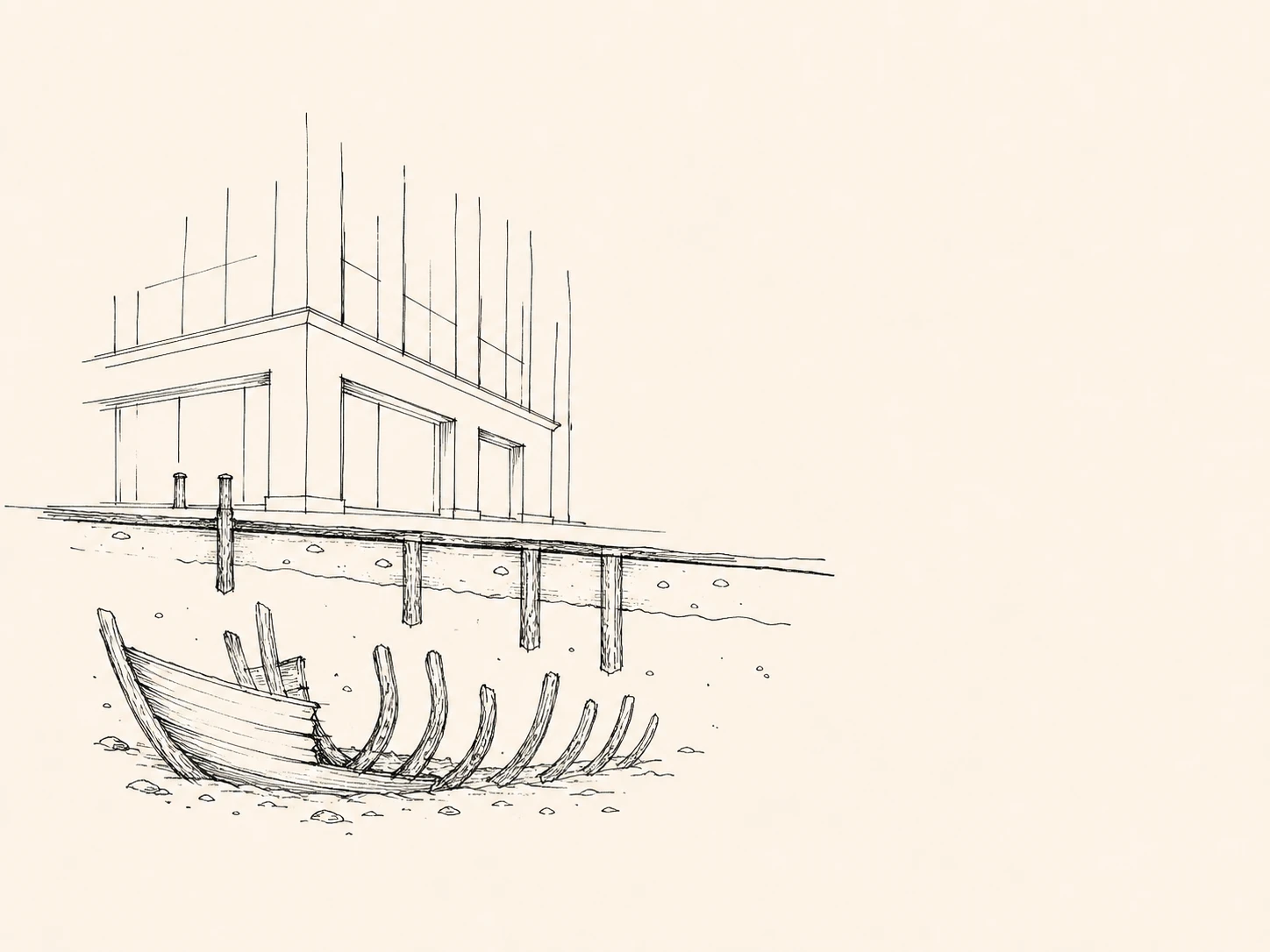
Gold Rush ships still lie below the streets of today's Financial District.
When the Gold Rush began in 1849, sailors abandoned hundreds of ships in the bay to search for gold. The Niantic was hauled onto the beach and reused as a warehouse and hotel.
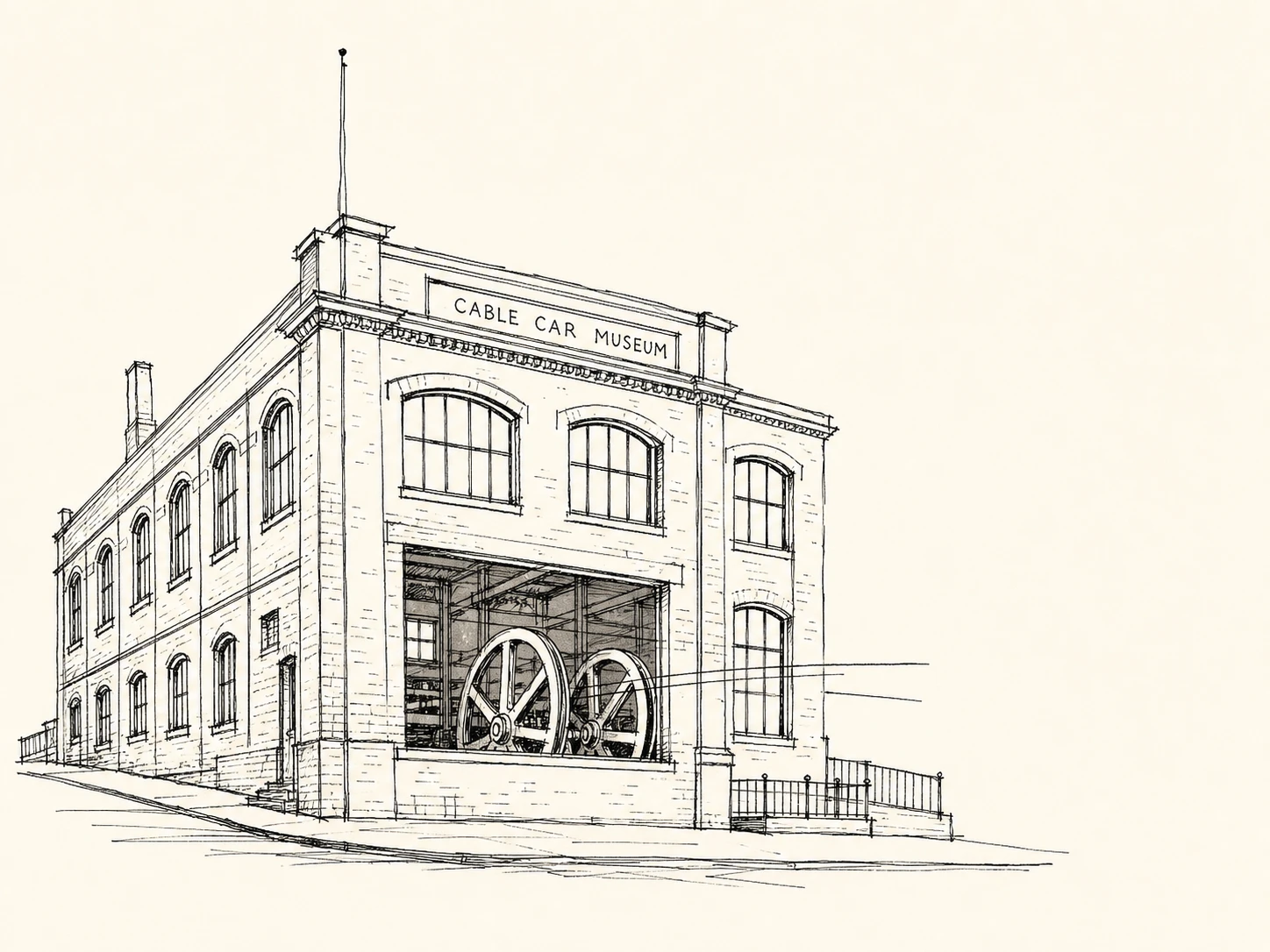
The cable cars moving through the streets have no power of their own; steel cables turning inside this building pull them.
San Francisco's cable cars carry no onboard engines. Since 1873, they have moved by gripping a continuously running steel cable below a slot in the street, then stopping when the grip is released.
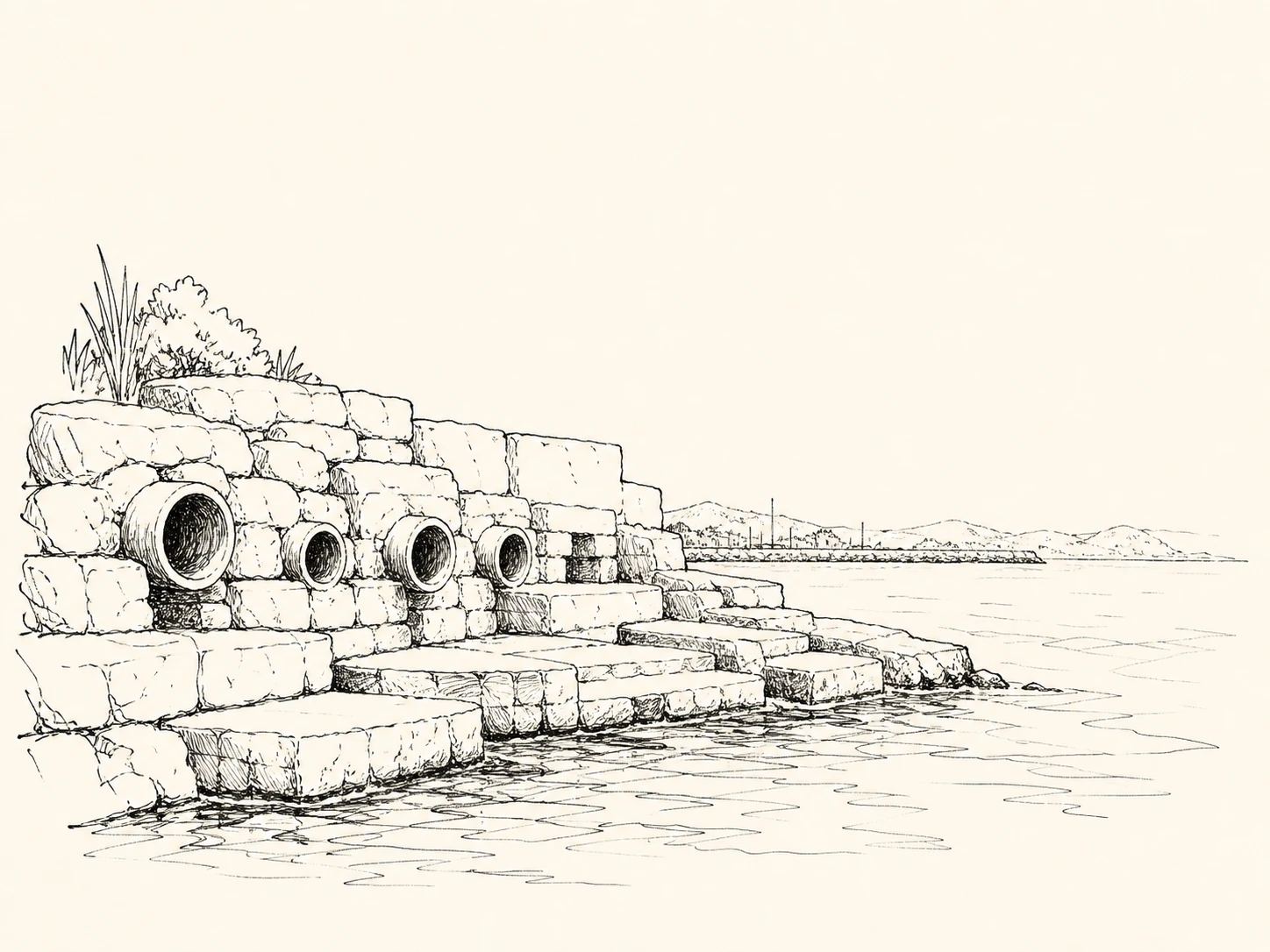
This stone jetty makes low notes as the tide moves through its pipes.
In 1986, the Exploratorium installed the Wave Organ on a Marina breakwater. More than 20 pipes meet the water at different heights; as the tide rises and falls, compressed air produces gurgles and low, sighing notes, clearest around high tide.