In a city pressed between mountain and sea, water is rarely left alone. It waits beneath football pitches, fills a former bay, and once sat above 108 stone columns inside a hill. Street level stays crowded while the ground below quietly makes room.
4 web previews ·120 stories in the app
Shek Kip Mei / Sham Shui Po · Editorial illustration, not a historical photo
Look again as you pass
Four Hong Kong footnotes
Short previews and public sources only. Read the complete collection in City Whisper.
01 · Shek Kip Mei / Sham Shui Po
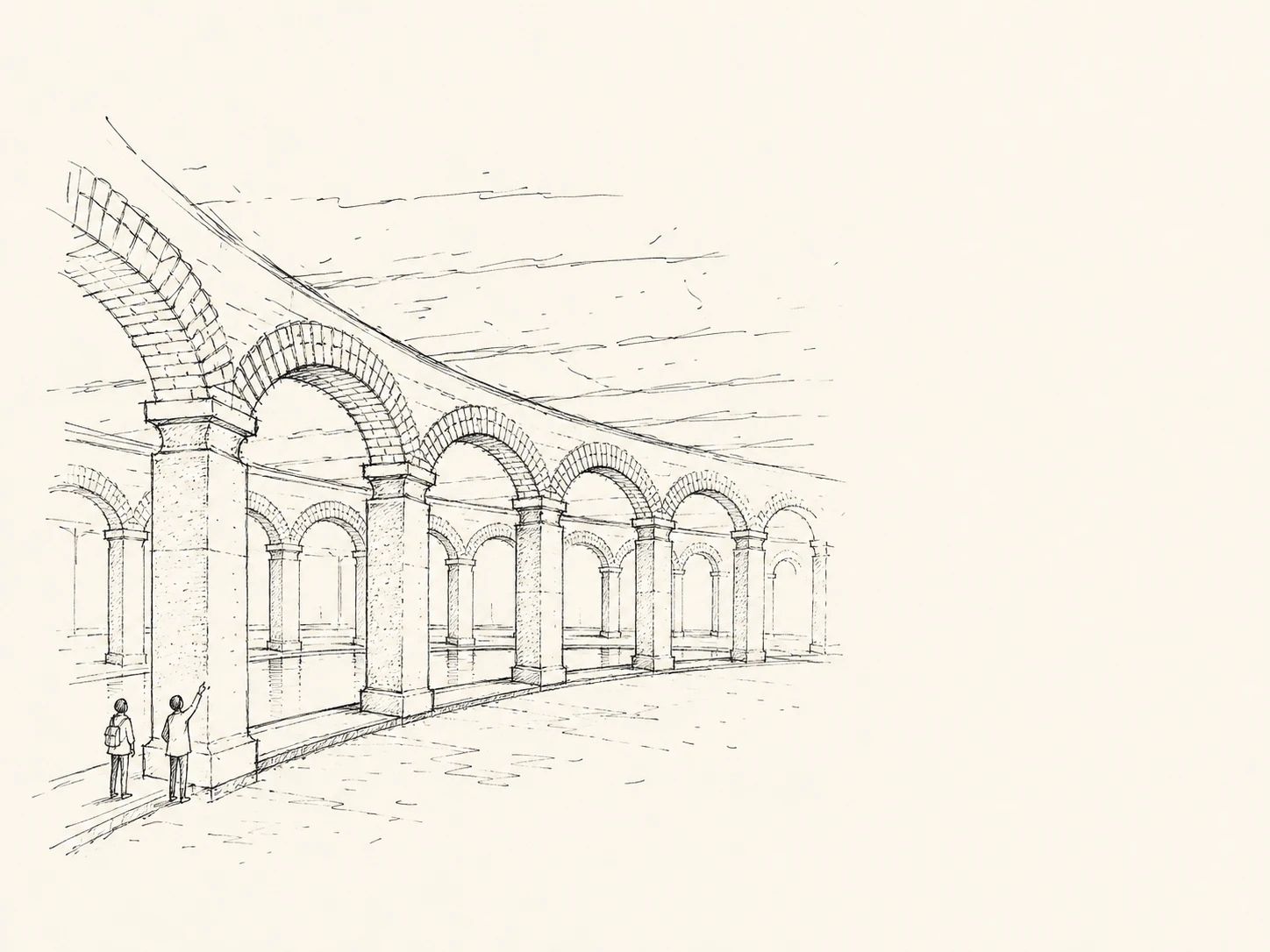
A ring of arches opened under the hill
Beneath Bishop Hill, 108 stone columns support a circular former service reservoir.
Beneath a hill used for morning exercise lies the former Sham Shui Po Service Reservoir, completed in 1904. The circular tank held 9,900 cubic meters; brick arches transferred the concrete roof’s weight to 108 granite columns.
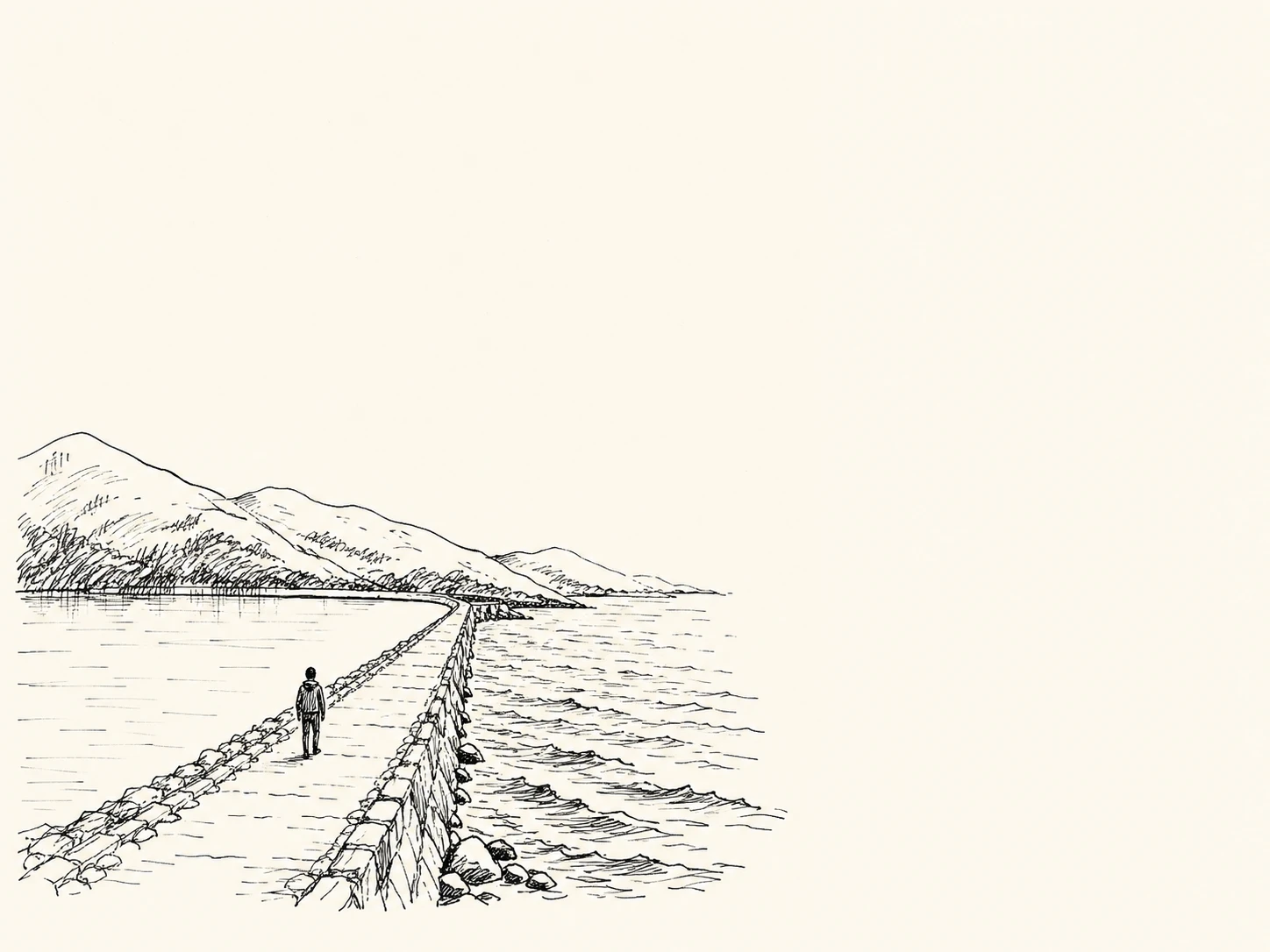
From the dam, sea lies on one side and fresh water stored in a former bay on the other.
Plover Cove Reservoir is not a basin dug in the mountains. Engineers built a long dam across a bay entrance, excluded seawater, and turned the inside into fresh-water storage.
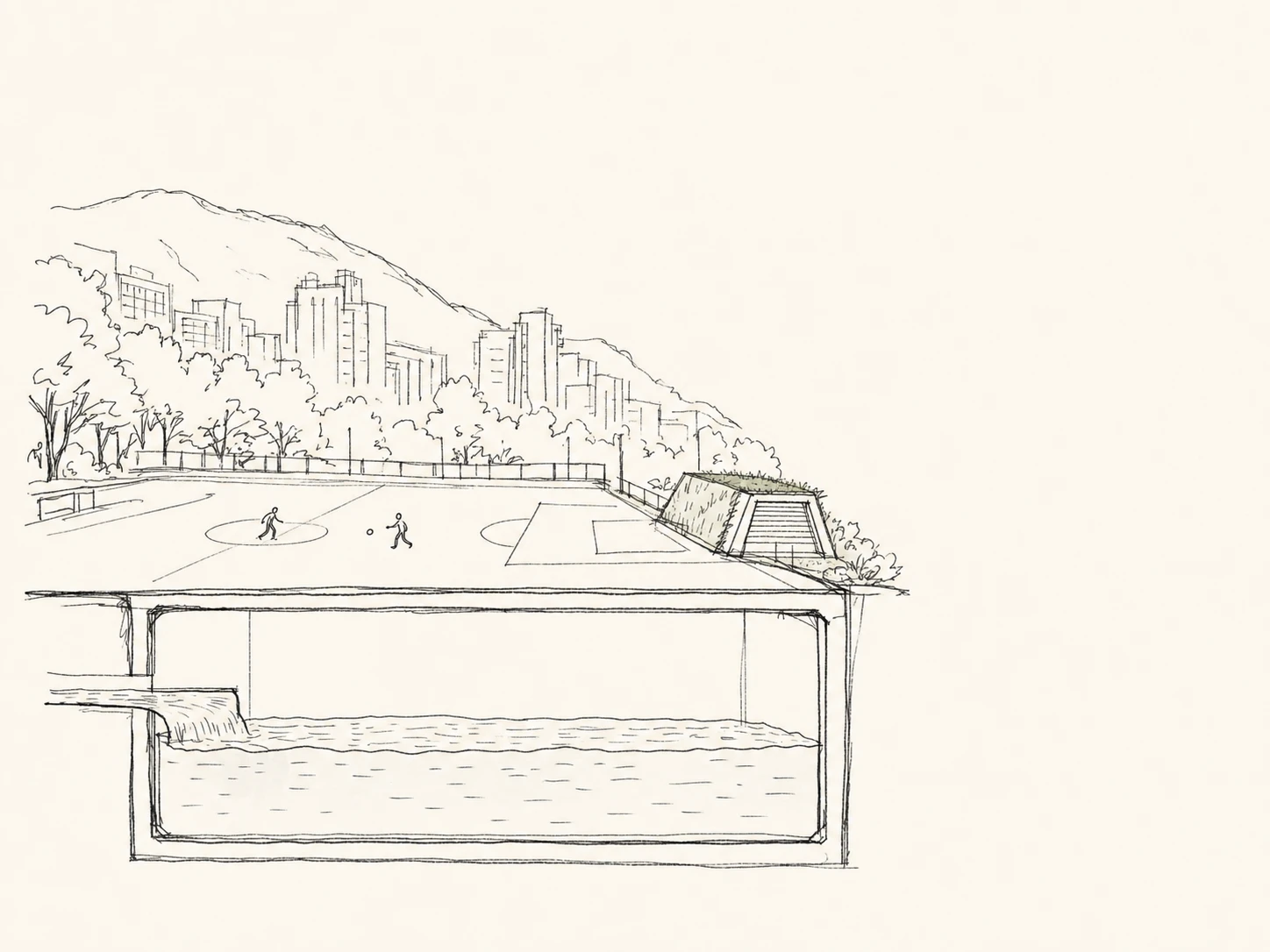
Eleven playing fields stay in use while 60,000 cubic meters of stormwater waits underground.
Games continue above; during a downpour, the underground shift begins. Beneath Happy Valley Recreation Ground is a 60,000-cubic-meter stormwater tank, roughly equal to 24 standard swimming pools.
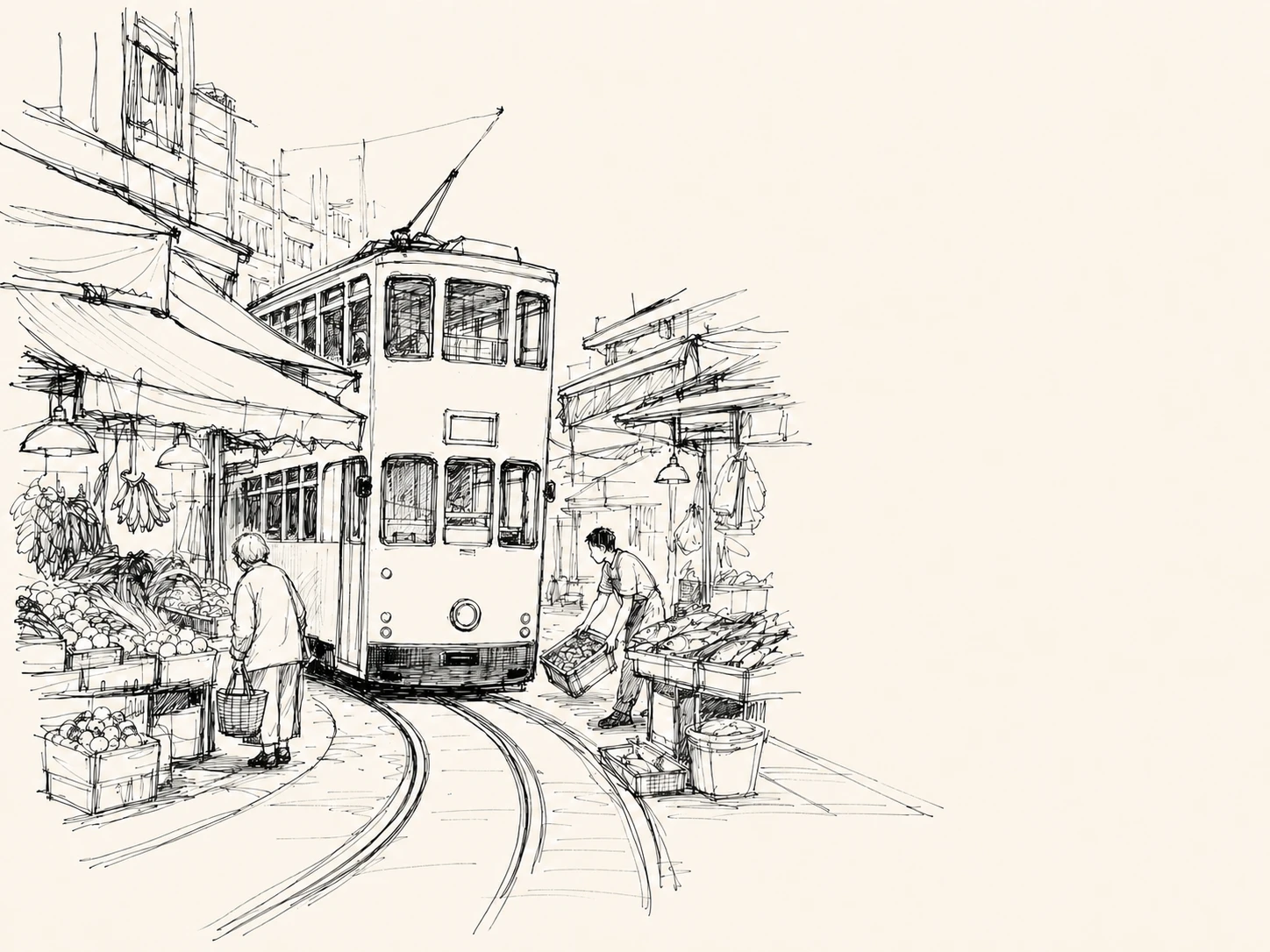
When a North Point tram turns into Chun Yeung Street, produce stalls yield half a step to the rails.
A tram turns from broad King’s Road and Chun Yeung Street instantly narrows. Awnings reach toward the track; vegetables and fresh fish nearly touch the car.