Beitou’s steam makes the city’s heat visible. At Beimen station, stone walls from the old railway works sit beside the MRT; near Dadaocheng, the river is still reached through a gate built to close against floods. Taipei’s eras interrupt the everyday instead of staying buried.
4 web previews ·106 stories in the app
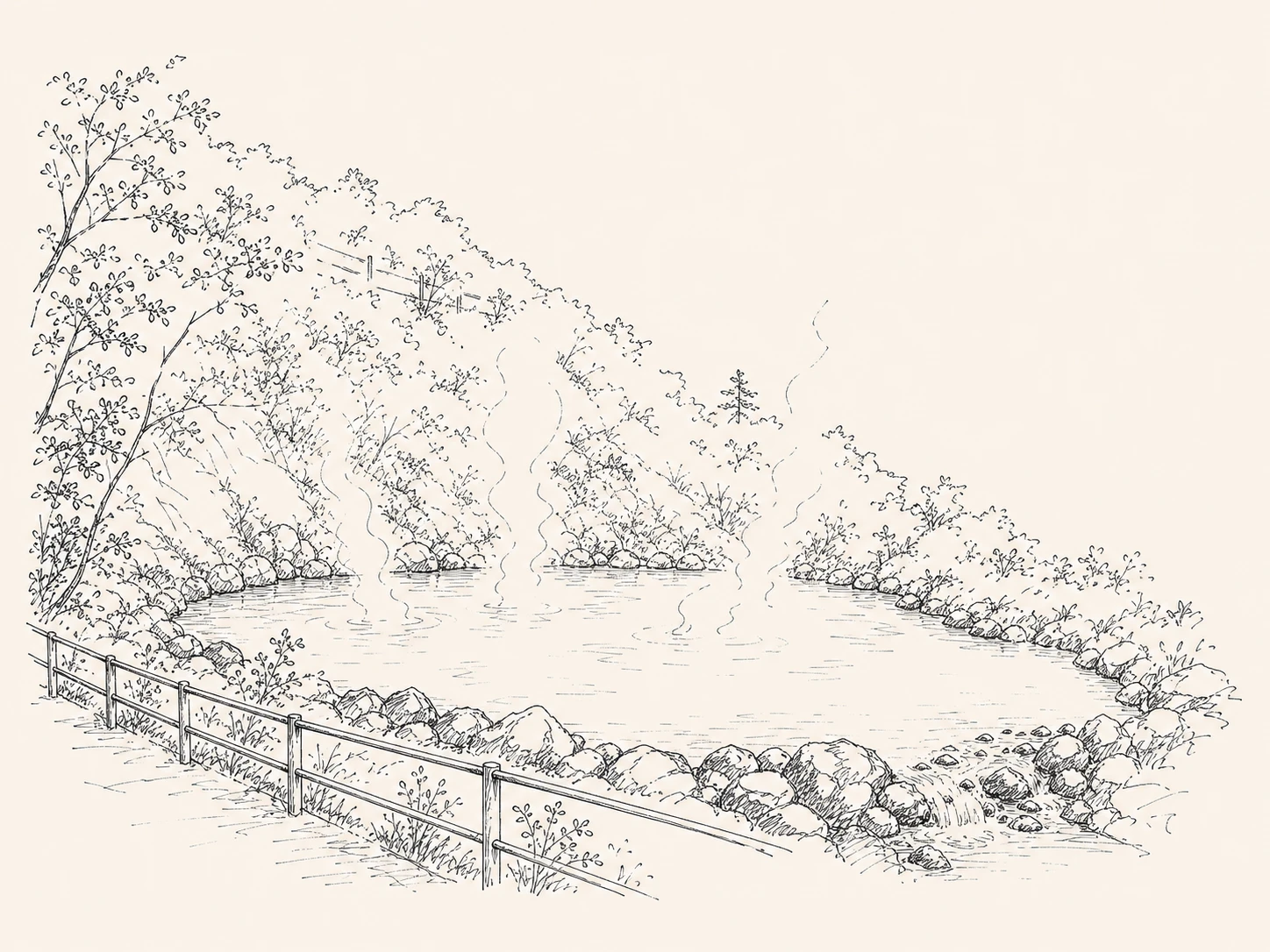
Xinbeitou · Thermal Valley · Editorial illustration, not a historical photo
Look again as you pass
Four Taipei footnotes
Short previews and public sources only. Read the complete collection in City Whisper.
01 · Xinbeitou · Thermal Valley
The City's Heat Source Breaks the Surface
The white mist is not an effect. Beitou's underground heat is surfacing here.
Thermal Valley puts Beitou's underground heat directly on the surface. High-temperature spring water colors the basin; steam thickens and thins with weather before joining the Beitou Stream system.
An MRT Station Unearths Twelve Windows into Old Taipei
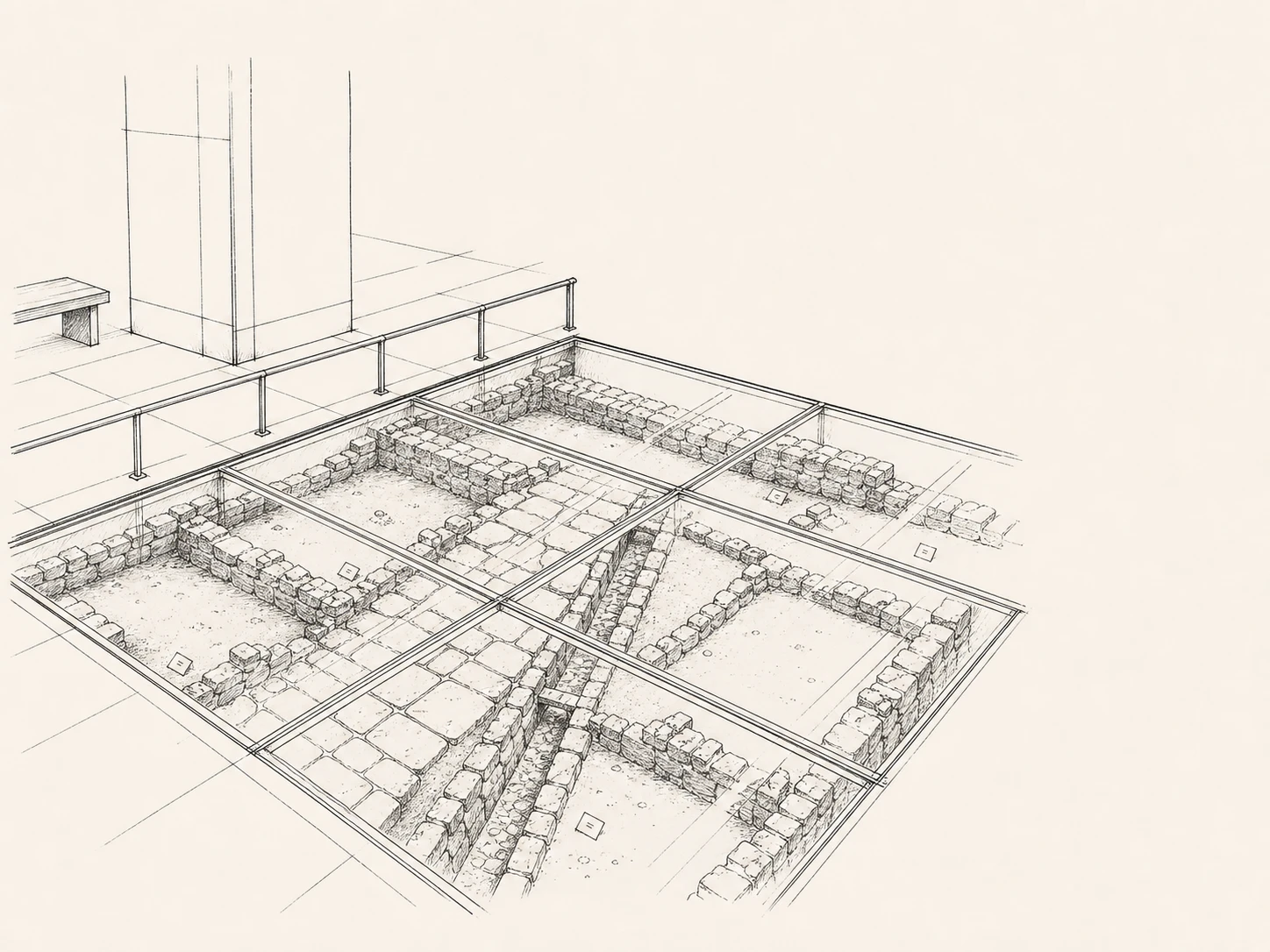
Look down while waiting: the stone walls beneath the glass predate the MRT by several layers of city.
Construction beneath Beimen Station did not encounter blank ground. Remains associated with the Qing-era Machinery Bureau emerged through several soil layers, including stone walls, roads, and drains.
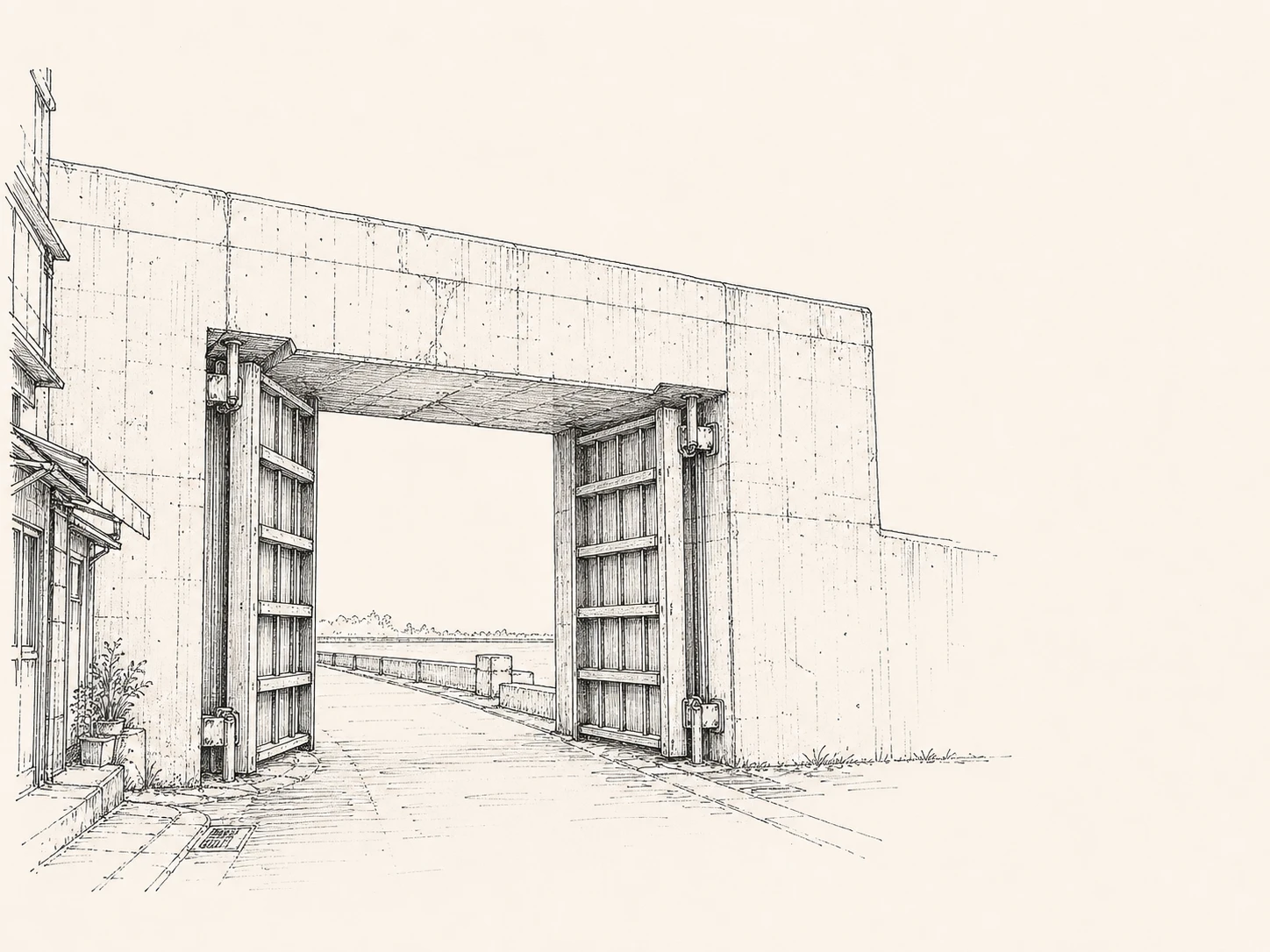
The walk from Dihua Street to the river passes through a thick door that can close at any time.
Dadaocheng's busiest riverfront entrance is also a flood gate that can be shut. On ordinary days, people pass through the thick wall from Dihua Street to stroll by the wharf.
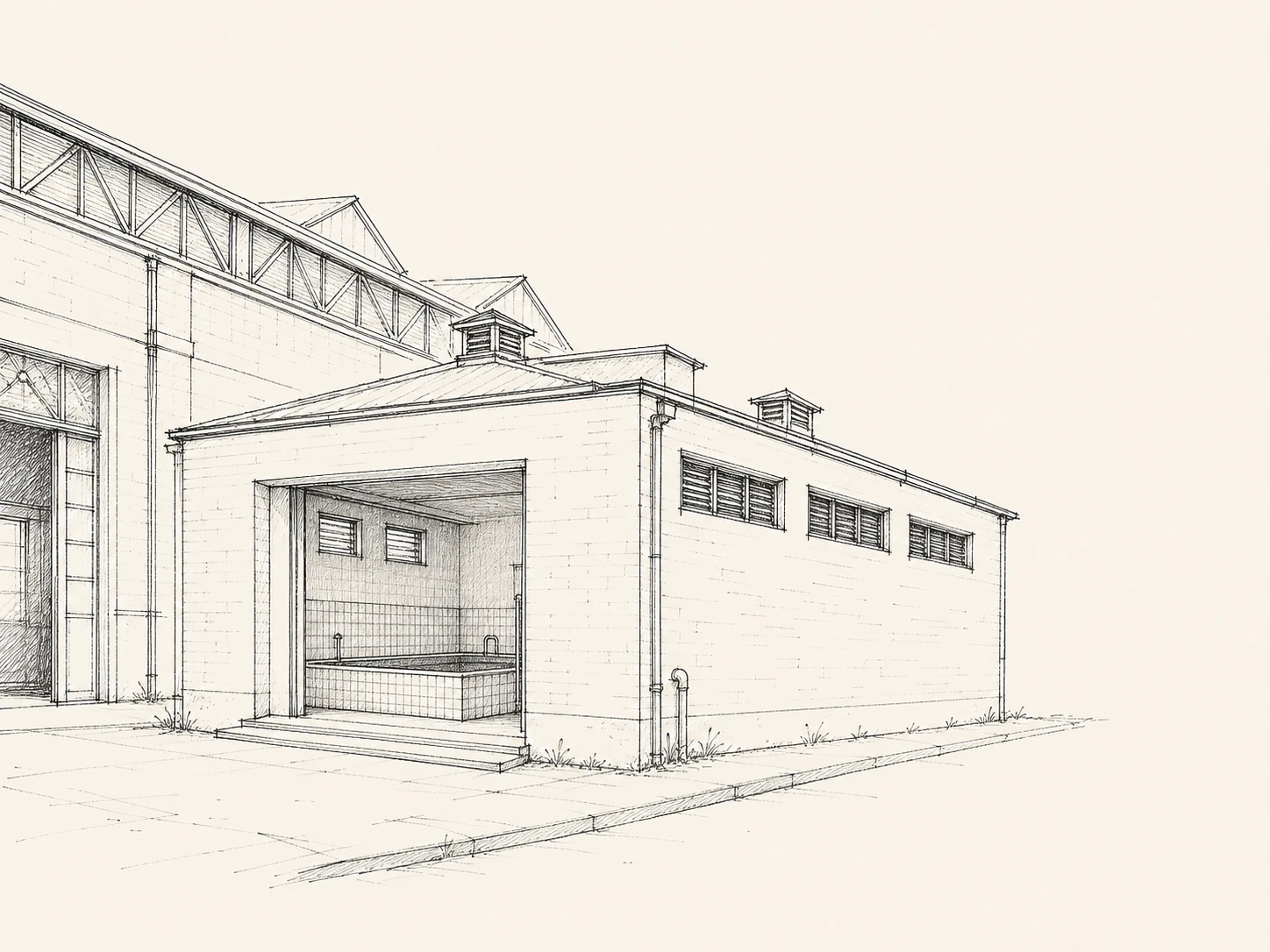
Beside the enormous railroad works, a bathhouse washed oil and heat from workers.
Taipei Railway Workshop repaired trains and also had to care for the people who repaired them. Steam from the plant's power facilities heated water in a staff bathhouse so shift workers could wash off oil and fatigue before leaving.