Reclamation pushed the sea away, but walls and temple gates still face its former direction. Elsewhere, nine gates manage a reservoir made from the sea, and Lau Pa Sat came apart so the MRT could pass below. The old coordinates remain visible in concrete and cast iron.
4 web previews ·108 stories in the app
Bedok · Editorial illustration, not a historical photo
Look again as you pass
Four Singapore footnotes
Short previews and public sources only. Read the complete collection in City Whisper.
01 · Bedok
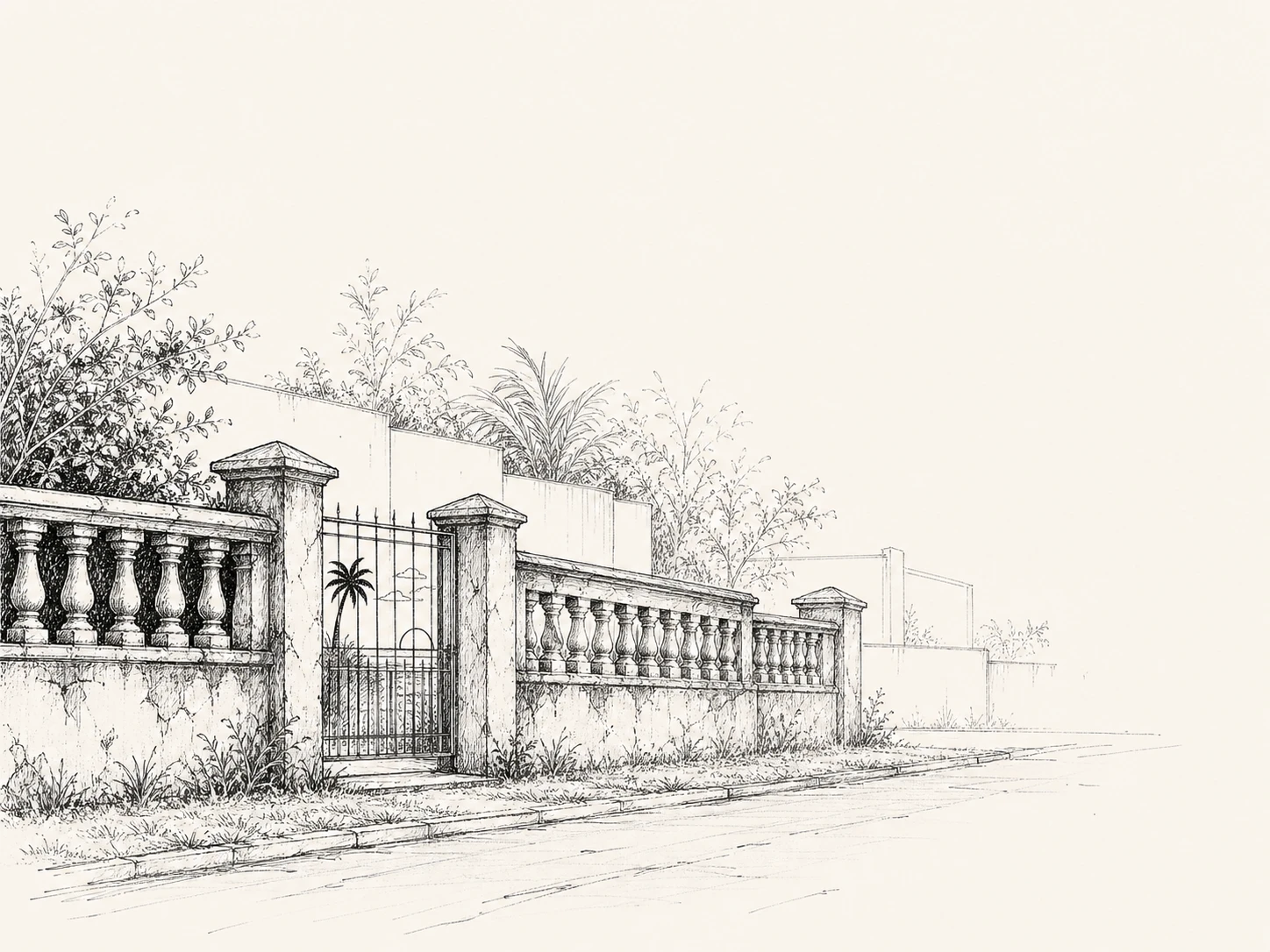
A seawall stranded behind houses
Waves once reached its base; now land lies on both sides.
An old seawall hides behind the houses on Nallur Road. Its balustrade and iron gate, decorated with sea, sun, and palm motifs, remain, but both sides are now dry land.
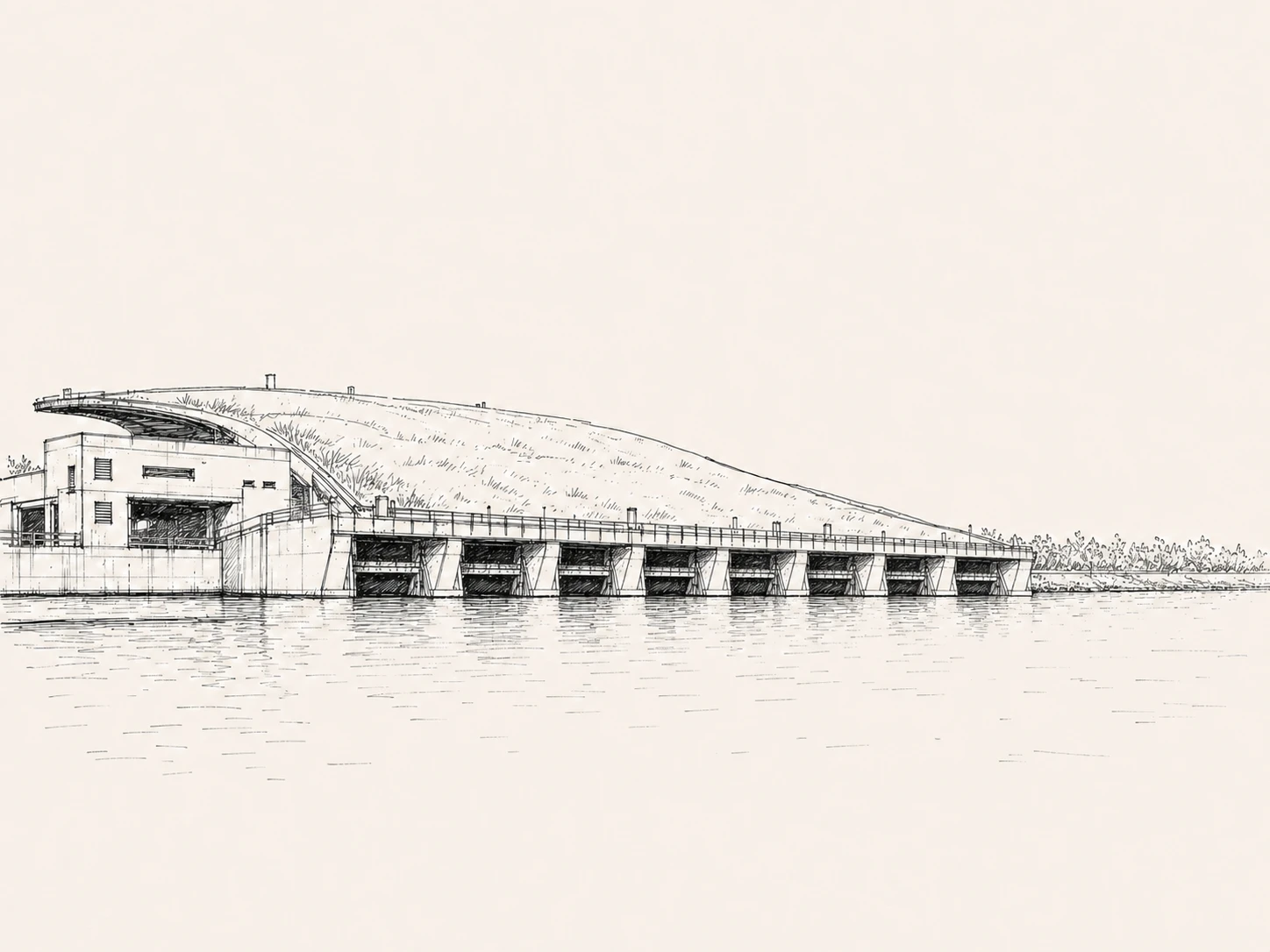
Nine gates beneath a grassy roof schedule the tide for downtown.
Marina Barrage looks like a grassy park built for flying kites. Beneath it, nine gates cross the channel. The barrier excludes seawater so Marina Basin can become a freshwater reservoir while helping downtown handle storms.
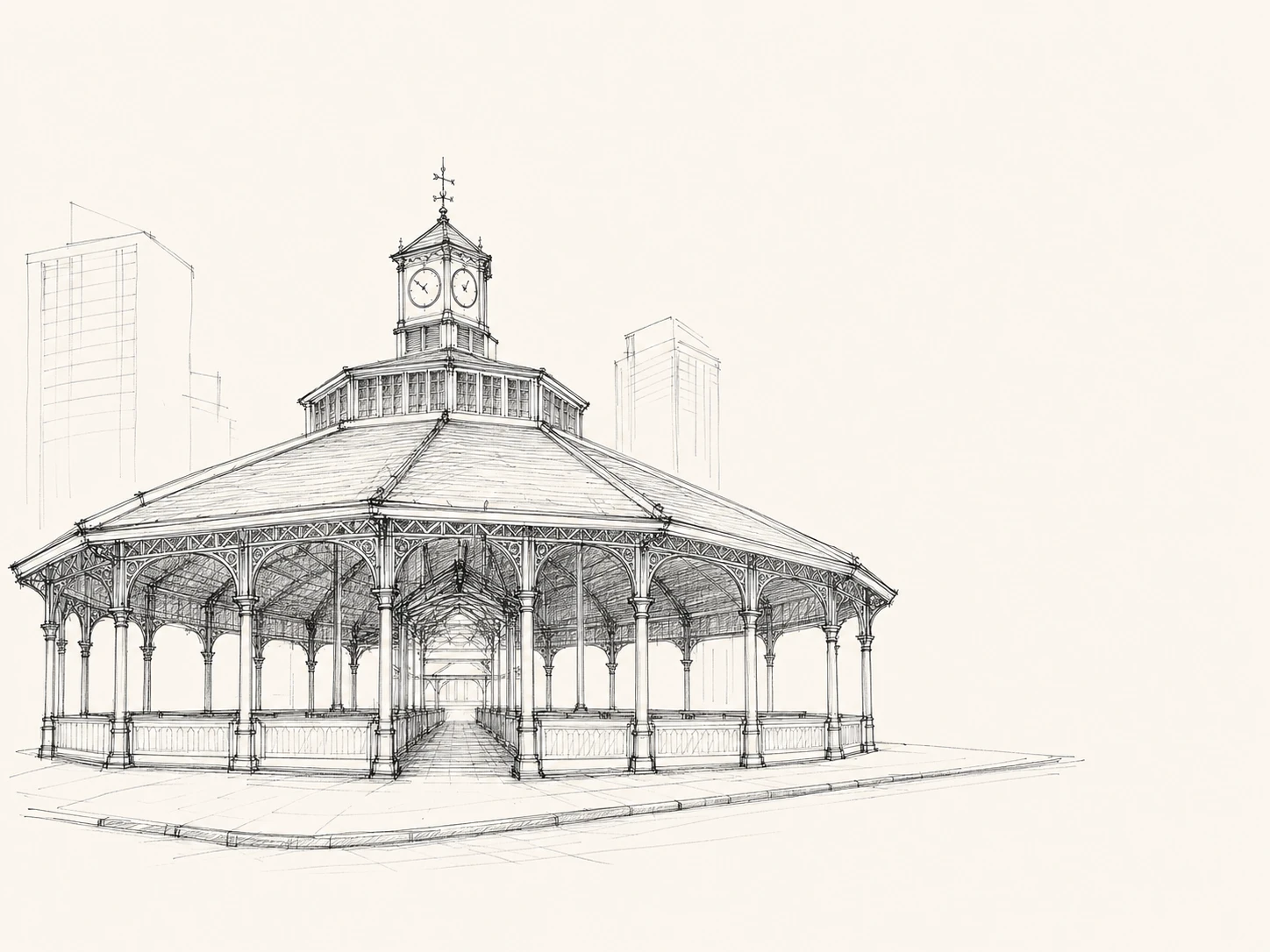
Its cast-iron frame was dismantled, stored, and put back together.
Cast-iron columns hold up Lau Pa Sat’s octagonal market, with radial aisles spreading from its central clock tower. During MRT construction, components were dismantled and stored while work proceeded below, then reassembled.
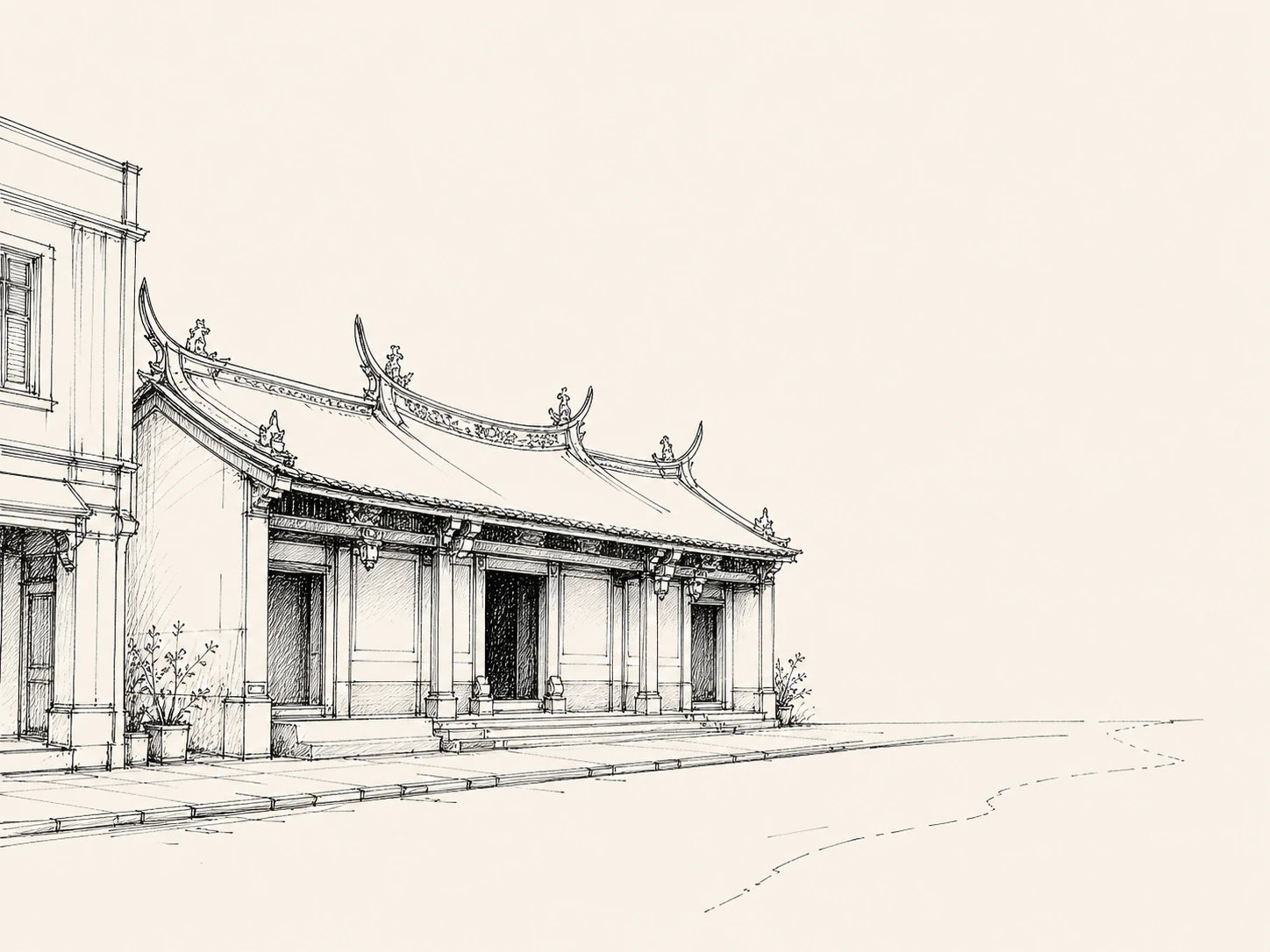
The water once met these steps; reclamation moved it several streets away.
Thian Hock Keng was built in the 19th century beside the shore of Telok Ayer Basin, where travelers arriving by sea could come after landing. The temple entrance still faces the street, but land reclamation pushed the water several blocks away.